

Monash University students slip through JobKeeper safety net
More than 1 million casual Australian employees have been left out in the cold by the Federal Government’s $130 billion JobKeeper rescue package.


BY WILLIAM HUYNH and LAURA PLACELLA
More than 1 million casual Australian employees have been left out in the cold by the Federal Government’s $130 billion JobKeeper rescue package, which has been extended to 6 million workers.
The package – the largest single injection of stimulus Australia has ever seen – was passed by both houses of Federal Parliament last night, ensuring those who are eligible will receive a fortnightly $1500 wage subsidy for six months.
The Coronavirus Economic Response Package (Payments and Benefits) Bill does not list the eligibility requirements, instead it empowers Treasurer Josh Frydenberg to decide who will benefit.
Full-time and part-time workers, including stood down employees, have been confirmed to be eligible for JobKeeper payments.
But with Mr Frydenberg saying a “line had to be drawn”, the Federal Government has made it clear that casual workers must have “been with their employer on a regular and systematic basis for at least the previous 12 months” to receive the subsidy, despite objection from the opposition.
Business/Arts student Ebony Hartridge-Linton worked as a bartender and missed the 12-month minimum employment timeframe by a mere 12 days.
“My actual contract was not signed until March 13 last year,” Ms Hartridge-Linton said.
“So, I’ve been with the company, as of the March [1] cut-off, for 354 days [due to the leap year].”
Ms Hartridge-Linton regularly bartended at venues in Hawthorn and Richmond and said, despite her casual status, she had been working full-time hours since November last year.

“It’s really annoying…I was earning about $1800 a fortnight,” she said.
“The JobKeeper subsidy would be less than what I was otherwise earning.”
Ms Hartridge-Linton’s ineligibility has forced her to “dig into [her] savings” to pay rent and bills.
For the many casual workers in Ms Hartridge-Linton's situation, there is little work on offer at the moment to recoup lost income.
Applying for other government payments has also proved difficult.
“I have applied for Centrelink and I’m still waiting on the call from them,” she said.
“It’s been a very confusing process. I would much rather the JobKeeper come through.”

The 12-month minimum employment timeframe has also impacted retail industry casuals which, like hospitality, has a quick staff turnover rate.
Design student Amy Carey lost two casual jobs due to the closure of businesses at Chadstone Shopping Centre, where she was a retail assistant.
Ms Carey said she was “gutted” to hear she will miss out on the JobKeeper Payment because she had only commenced work in October 2019.
“I was studying all last year and moving so I didn’t get a job for the first few months that I was living in Melbourne,” Ms Carey said.
“I set myself up really well this year to have the two jobs, and do uni, and then to not be in that criteria it was like, ‘what am I going to do now?’.”
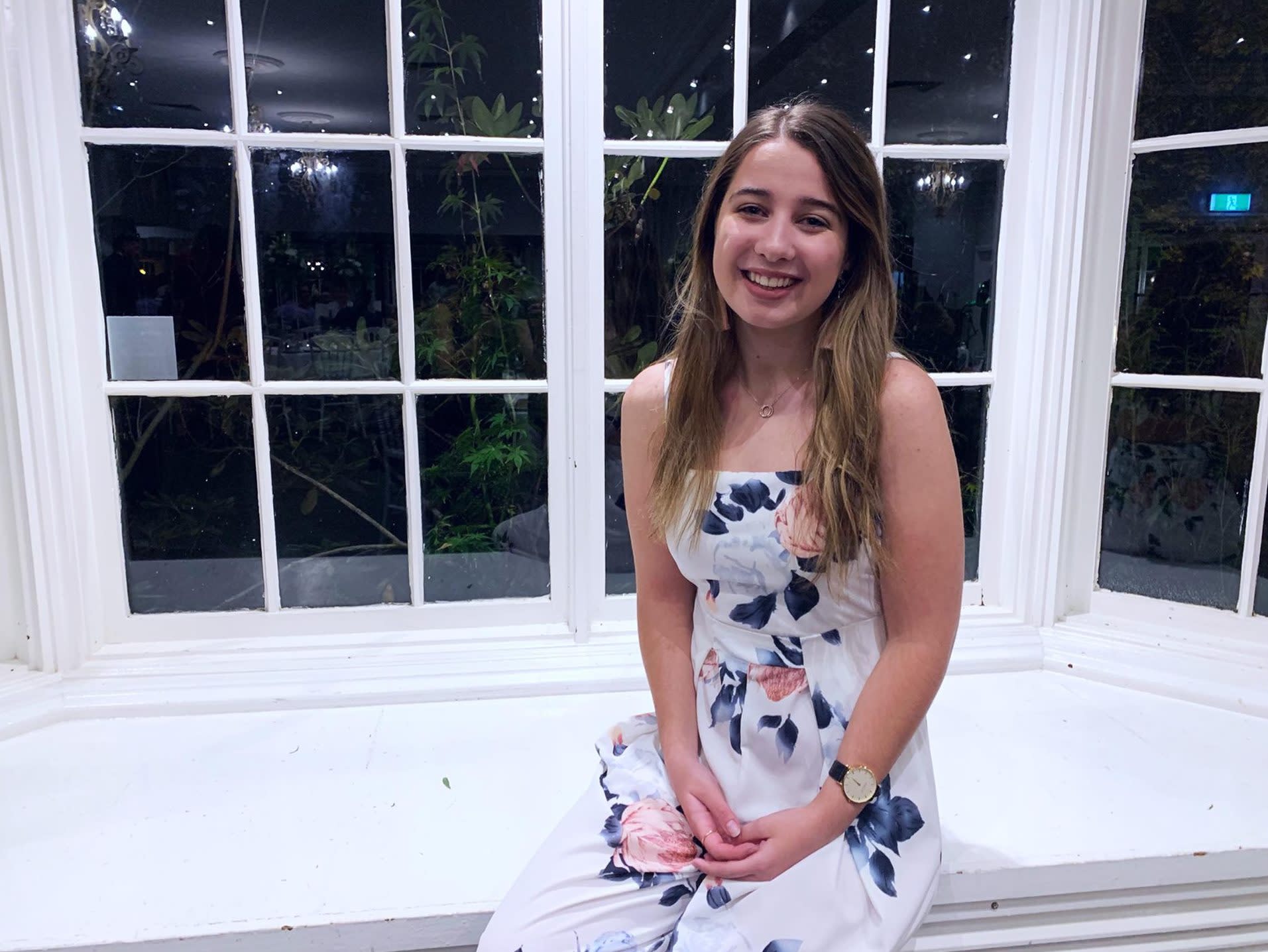
Before the shutdown, Ms Carey said she was earning around $1000 a week.
“I was getting about 20 hours for both jobs, so I was doing 40-hour weeks.”
For Ms Carey, Centrelink has also been “a hassle to go through”.
Around 750,000 Australian businesses have registered for JobKeeper, having to meet certain eligibility requirements themselves.
One of these requirements is; if their business has an annual turnover of $1 billion or more, their turnover must likely fall (by their estimates) by 50 per cent or more.

Interpreting/Translation student Michael McKinley has worked as a casual medical administrator in a Glen Waverley clinic for just under a year.
He was employed last year on March 16 and missed out on JobKeeper by just over a fortnight.
But he was told that the business was ineligible for the subsidy anyway, because its turnover was not expected to fall by 50 per cent.
Mr McKinley’s work has not closed but due to the decline in patients, his shifts have drastically reduced.
“I’ve only got two shifts over the next fortnight. Normally, I’d be getting maybe six to eight shifts of anywhere from five to eight hours each,” Mr McKinley said.
He had previously earned around $1200 a fortnight.
“JobKeeper would have been better than my normal pay but scaled with everything, it would have really helped because I have to pay for rent and utilities,” he said.
“I’m sort of left to my own devices by a government who seems to think that just because a company has a billion dollars, they’re going to dole that out to everyone who works for them.”
He has also struggled applying for benefits through Centrelink.
“My Youth Allowance claim is already taking three weeks and I’m not sure if I should even bother going for the JobSeeker, if that would do me any better.
“It’s been a mess.”
Mr McKinley has luckily been able to continue his sole trader job as a tutor, but said he is “having to survive on a third” of his usual income.

Any worker in Australia with a temporary visa is also ineligible for the JobKeeper Payment.
Recent Biomedical and Health Science graduate Merlyn Tan works casually as a research assistant and sleep technician at a private hospital in Melbourne.
Ms Tan is on a temporary work visa and said her “longest contract is only 10 months”.
“Given that I am an international, I knew off the bat that I’m probably not eligible for a lot of things,” Ms Tan said.
Ms Tan is a Singaporean and worked regularly, earning a monthly income of around $5000.
By not being an Australian citizen or permanent visa holder, she cannot receive any government benefits but is still taxed.

Ms Tan was irritated by the Federal Government’s lack of concern for temporary visa holders and said that help should be given “on all fronts”.
“I want the government to be able to do more for casuals,” she said.
“I do not expect the same amount of help to be given to internationals because every country will try and protect its citizens and permanent residents first.
“But this is a time of crisis. Everyone is suffering.”


