

Cambodian NGO appeals for more Australian funding for domestic violence program
By Mikaela Day This is the third article in a special four part series on domestic violence in Cambodia. Read the other articles in this series here. A Cambodian NGO that aims to reduce Cambodia’s rates of domestic violence by travelling to rural...


By Mikaela Day
This is the third article in a special four part series on domestic violence in Cambodia. Read the other articles in this series here.
A Cambodian NGO that aims to reduce Cambodia’s rates of domestic violence by travelling to rural areas, has asked for Australian funding of its program to continue.
Communities throughout the Kampong Thom and Siem Reap provinces are changing the traditions surrounding women’s equality and violence thanks the Transcultural Psychosocial Organisation (TPO).
The local NGO runs a program that assists survivors with mental health issues resulting from domestic and sexual abuse that is funded by Australia’s Department of Foreign Affairs and Trade, but its future is unclear.
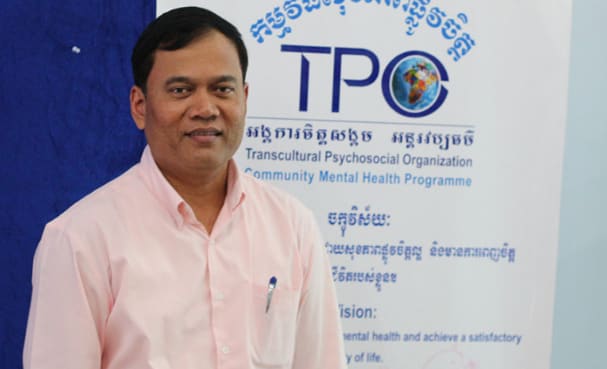
Executive director of TPO Dr Chhim Sotheara said the five-year project relies on DFAT funding of an average of $80,000 per year to promote gender equality and increase access to psychosocial services.
But he has yet to receive any guarantee that the aid from Australia will continue after 2018.
“DFAT is very committed to ending violence against women, we have been one of their partners for three years now,” Dr Chimm said.
“I hope… the [Australian] government will continue to work on this.”
Although TPO’s programs work to achieve the Cambodian Millennium Goal, they depend on foreign donors for support.
“[The Cambodian government] consider NGO as a source to help support them but they don’t know we work so hard to get the money from outside to help our people,” Dr Chhim said.
TPO was developed in 1995 by Dr Chhim, who is one of only 54 psychiatrists in Cambodia.
One aspect of their program is to seek out “community resource people”. These are people who villagers can turn to in times of need and train them to deal with gender problems.
“The important thing is we identify the community resource people, so the one we train so they are very active and they convince the other members about the rights and what they should do,” Dr Chhim said.
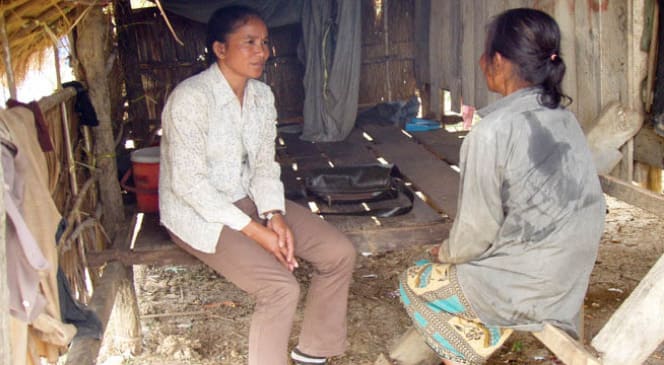
However, Dr Chimm said the most difficult aspect is getting women to speak out in the first place due to preconceived ideas.
“The women, they don’t understand that they need to report this or that they have the right to do this,” he said.
A survey conducted by the Ministry of Women’s Affairs showed that of the 22.5 per cent of married women who experience domestic violence, 89 per cent do not report it.
“In rural area they still think that violence is a private matter so they never talk about private matters outside,” Dr Chhim said.
“The tradition is that when you talk about yourself outside the house you are not a good woman.”
To try get more women to speak out, the program helps create support networks and self-help groups within communities.
“The good thing about our self-help group the woman does not feel that they are lonely, so there are other victim in the group as well,” Dr Chhim said.
“They believe they have a common voice to get help, to deal with the problem.”
Dr Chhim said community women were educated on their rights and services available to them.
“As part of our education program we also teach them that they have the right to be equal and the right to say no and the right to have access to other service like legal,” Dr Chhim said.
DFAT reports the domestic violence rates in Cambodia are high, with one in five women reporting physical, sexual or emotional abuse from their partner.
While no funding for TPO has been announced after the current aid program ends, a spokesperson for DFAT said Australia is one of the largest donors in Cambodia and gender equality and women’s empowerment are areas that need continual support.
“Australia remains committed to eliminating violence against women through our aid program. Our development activities assist women who experience violence to access quality services and support, and obtain justice,” a spokesperson for DFAT said.
Australia’s international aid a program Ending Violence Against Women has allowed the Ministry of Women’s Affairs to have access to reliable data and studies which show about 10,000 women and families have accessed services including legal aid, shelter and counseling in the past year.
More than 80 per cent of Australia’s aid investments are focused on gender targets with DFAT stating this focus is important for growth, development and stability.
“Positive gender equality outcomes are essential for improving a country’s development trajectory,” the spokesperson said.
“Evidence shows that supporting women’s full economic participation is fundamental to unlocking the economic potential of our region and to achieving development outcomes.”
TPO continues to work with local Cambodian communities in raising awareness of gender-based violence and improve the mental health and well-being of survivors.
Dr Chimm said they aim to prevent future occurrences, however much work still needs to be done.
“Although there may be some increase in understanding, increase in the need to report, in every community we work with we still see all these issues again and again,” he said.


