

Cambodian turtle breeding program could save species
BY ALEX MEIBUSCH When you initially see the rows of tanks filled with baby Cantor’s turtles (locally known as Rormich) at the Mekong Turtle Conservation Centre, it’s hard to believe that up until 2007 the species was thought to be extinct. The...


BY ALEX MEIBUSCH
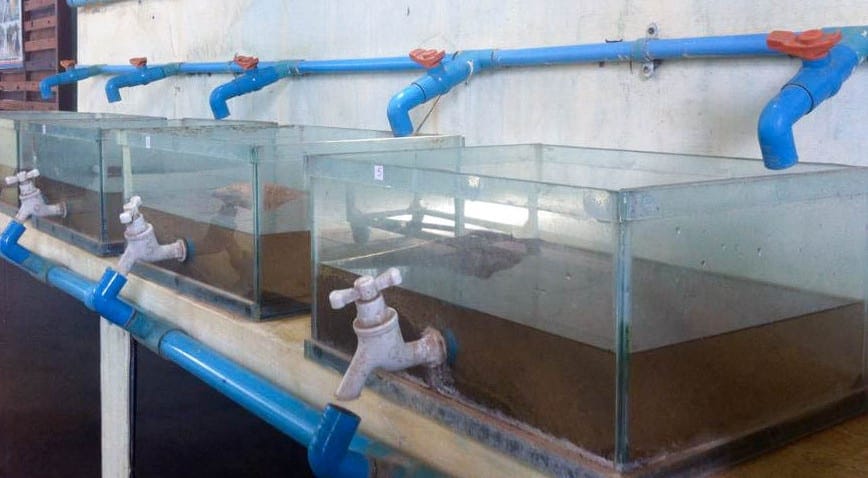
When you initially see the rows of tanks filled with baby Cantor’s turtles (locally known as Rormich) at the Mekong Turtle Conservation Centre, it’s hard to believe that up until 2007 the species was thought to be extinct.
The curious looking creature was only rediscovered after one was caught in a fishing net in Cambodia’s Sambro region, roughly 40 kilometres outside Kratie City.
It was the first sighting of the species since 2003.
It is still unknown how many Rormich turtles survive in Cambodia’s Mekong river due to their illusive nature.
The turtles spend 95 per cent of their lives underwater, often buried in sand, and only surface for air every 12 hours.
Established in 2011, the Mekong Turtle Conservation Centre (MTCC) is located in the heart of the Sambro region and is home to around 100 Rormich turtles.
“[The] turtle species… seems very gentle species, not harm to human, lovely and nice species,” MTCC Technical Supervisor Yeoung Sun said.
The turtles are raised at the centre for 10 months until they are large enough to ward off some predators. They are then released into the wild.
But this is only part of the conservation effort.
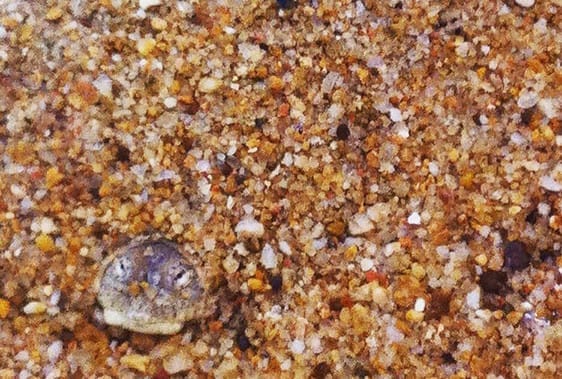
In 2010, Conservation International began a turtle protection program and provided incentives for local Cambodians to locate and protect turtle nests.
The program has since been expanded to include teams of dedicated rangers.
“We [now] have three groups of rangers who work finding turtle nests during turtle breeding season and guarding them until successfully hatched,” Mr Sun said.
The program is essential for the species’ survival but also promotes awareness of the wellbeing of turtles in the local communities.
“We have tried to persuade and disseminate many trainings about importance of the rare turtle species for their next generations,” Mr Sun said.
Despite being listed as endangered on the International Union for Conservation of Nature Red list, the Rormich turtle is still hunted for its meat which is considered a delicacy in Cambodia and Vietnam.
Interestingly, one of the reasons the turtle still exists in this region may be due to the Khmer Rouge.
The Sambro area was a haven for Khmer Rouge guerrillas right up until the communist group disbanded in the late 1990s.
This means the region did not develop at the same rapid pace as the rest of Cambodia, making this stretch of the Mekong river a haven for endangered animals.
But modern threats are finally catching up with the turtle. Both the Laos and Cambodian governments are planning to construct dams along the Mekong river and its tributaries.
The Cambodian Rural Development Team (CRDT), based in Kratie, is monitoring news of these developments closely.
Project Manager Dim Bin is concerned the dams could reduce the turtle population.
“When they block the dam, the water will be too low. After heavy rain, when they open the gate, the water floods to the sandbar and floods the nests,” Mr Bin said.
More than 4500 turtles have been released back into the the river since the MTCC program began and the turtles can be found both in Kratie Province and the neighbouring province Stung Treng.
Although survival seems more likely for the species, it is far from guaranteed.


