

Island erosion threatens Mekong river community


BY SALLY HAYLES
Standing at the side of the Mekong river, a villager points to a spot hundreds of metres out from the edge of the island of Koh Chraeng, explaining that this is where the banks of the island used to reach when he was young.
Erosion from Cambodia’s Mekong river is costing the island village of Kbal Koh valuable farmland and contributing to large numbers of families leaving the community for good.
Villager and land owner Khiev Iaen is one of many in the village who farm corn for the majority of their income, supplemented by other crops including watermelon.
Mr Iaen says the erosion has been very fast, with the island edge losing about 500 metres of land over 30 years.
“It’s very serious, I lost my land,” Mr Iaen said.
While he still has some of his land, he is worried the island will continue to shrink and says many villagers have already left.
More than 100 families have lost land to the river and 32 families have left the island over the past 5 years because of issues relating to land loss, according to village leaders.
Some villagers who were most affected decided to sell their remaining land and move to regional mainland town of Kratie, the leaders say. Others had to relocate their homes.
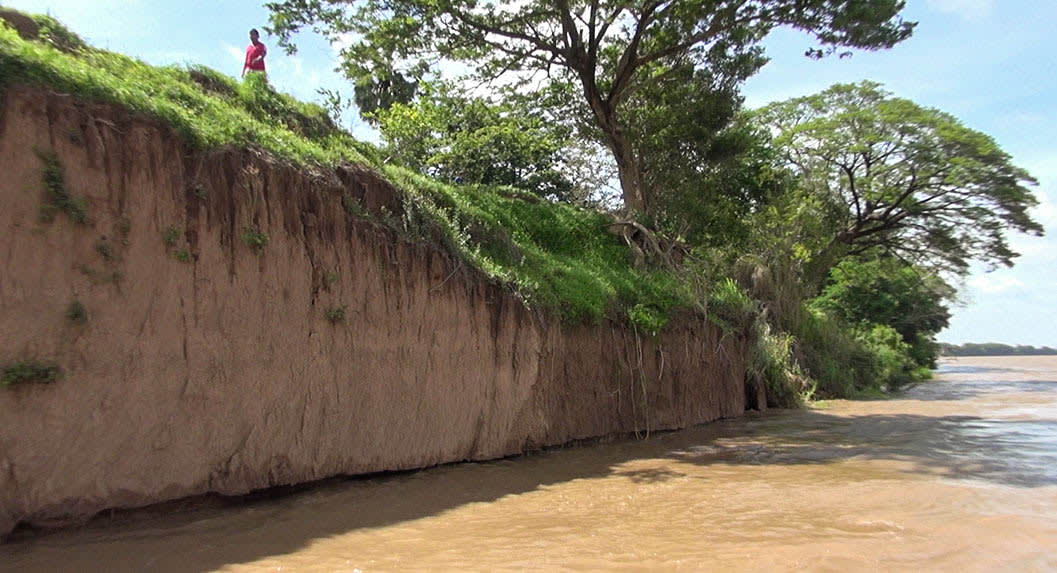
One of the main reasons for the erosion on Kbal Koh is the lack of trees.
A village leader says a company was established on the island a number of years ago, and logged much of the native forest. The company is no longer active on the island.
Monash University School of Earth Atmosphere and Environment Senior Lecturer Vanessa Wong says the presence of trees and other vegetation on river banks and islands prevents erosion by holding the soil sediments together.
“If you remove the vegetation, it means there’s nothing holding the banks together and that’s when you start to get erosion problems,” Dr Wong said.
Dr Wong says hydropower dams, such as those that have been built upstream in China and are planned for construction in Laos and Cambodia, would also impact the erosion because they change the way the water flows.
“What they do is they reverse the natural flow
“They hold water back when in periods of high flow and they let water out in periods of low flow,” Dr Wong said.
While this can reduce flooding, Dr Wong says it can cause issues including erosion, especially if the dams fail when it floods.
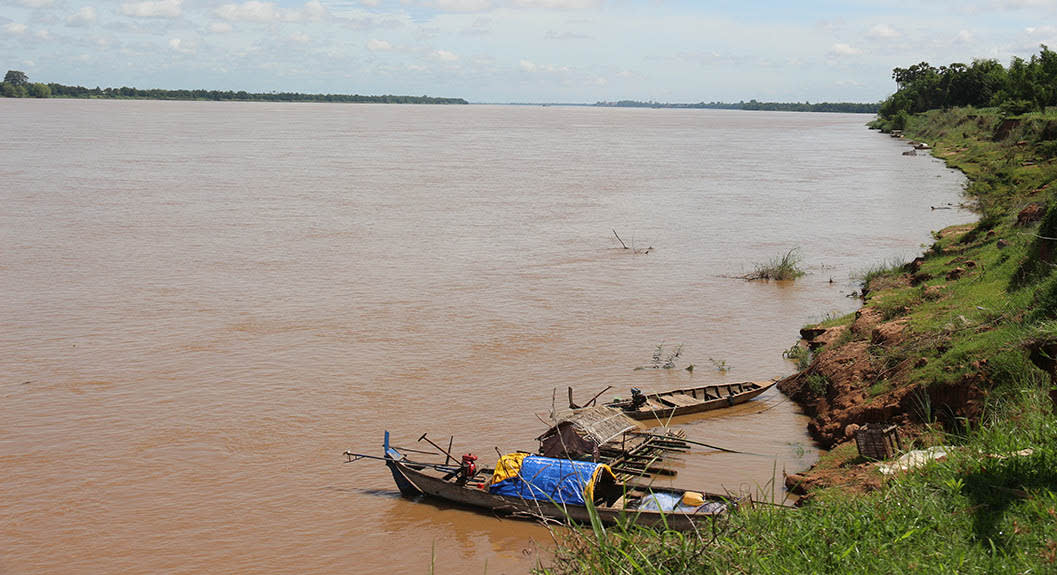
Village chief Khiev Malai says he is concerned about the erosion, although he remains confident the island will remain for the next generation.
Mr Malai said he would like to see funding from NGOs to support his community’s efforts in growing reeds to help conserve the island, an experiment which has shown some success.
Some in the village, including Khiev Iaen, would also like to see concrete barriers introduced.
Dr Wong said these could help if well maintained. She said generally the best way to reduce erosion was to increase the vegetation, both of trees and quicker growing plants such as grasses and water-tolerant rushes.
“Once [rushes] get established, they start to build sediment back up or they trap sediment in the river and build the land back up, but that can take a very long time,” Dr Wong said.
—–
[Khiev Iaen and Khiev Malai interviews conducted via a Khmer/English translator]


