


Magic Lanterns and Memory Gardens: A walk through screen history

Tucked away on the street level of the Australian Centre for the Moving Image (ACMI), lies a veritable wonderland of screen history.
If searching for a comprehensive look into the world of moving imagery, both international and Australian, one would be amiss to not spend an hour or two exploring this particular quarter of ACMI’s nether-regions.
The Story of the Moving Image is ACMI’s free and ongoing centrepiece exhibition. Featuring artefacts from the history of film and cinema, interactive video games and sets from animated films, the exhibition provides an informative (and genuinely entertaining) experience for people of any age.
Tor Evans, the assistant curator at ACMI, leads the ongoing curation of the exhibition.
Evans said that when designing the exhibition, the need to reflect the constantly changing nature of the screen industry was key, and so the exhibition was created to evolve alongside developments of the moving image.
“It was great to create an exhibition that could change over time to reflect new films... new video games, as well as explore... classic titles,” Evans said.
In addition to a dedicated project team of nine curators, ACMI employs a number of advisory groups. A key goal of the exhibition was to be accurate and inclusive, while also engaging as many demographics as possible.
“The idea that a visitor aged six, sixteen and sixty could visit and all get something out of it was important,” Evans said.
A First Nations advisory committee, a film advisory committee and a committee advising on young people and their relationship to screen culture worked alongside the curators.
When first entering the exhibition, you are handed a small paper disc which the assistant explains is a ‘lens’.
A chip inside the lens allows you to walk around scanning artworks as you travel through the exhibit. By following a web link on your lens and entering a personalised code, you can go back and re-view any feature you scanned.
The lenses were inspired by the wave of digital innovations that popped up in the museum and gallery scene of the 2010s. The Cooper Hewitt, Smithsonian Design Museum’s ‘pen’ was one such invention.
After being prototyped at a smaller ACMI exhibition in 2018, the lenses were introduced. They became a “way of being able to extend the conversation and include things that wouldn’t be able to fit in the physical space,” Evans said.
Visitors are presented almost immediately with a clear connection between ancient and historical practices involving the manipulation of light and modern moving imagery. This theme of constant evolution and a thread along which the new draws on the old is an integral part of this exhibition.
A sign near the entry establishes Indigenous projections using light and shadow as a bedrock of the moving image.
Evans said although there is a section of the exhibition dedicated to the Australian film industry, the curators sought to integrate Australian and First Nations storytelling throughout the entirety of the show.
“An organisation-wide thing across all the projects we do is to centre First Nations culture and stories… so I think a big part of this exhibition was to acknowledge that the moving image is only a really recent moment in comparison to the long continuum of First Nations storytelling on this land."
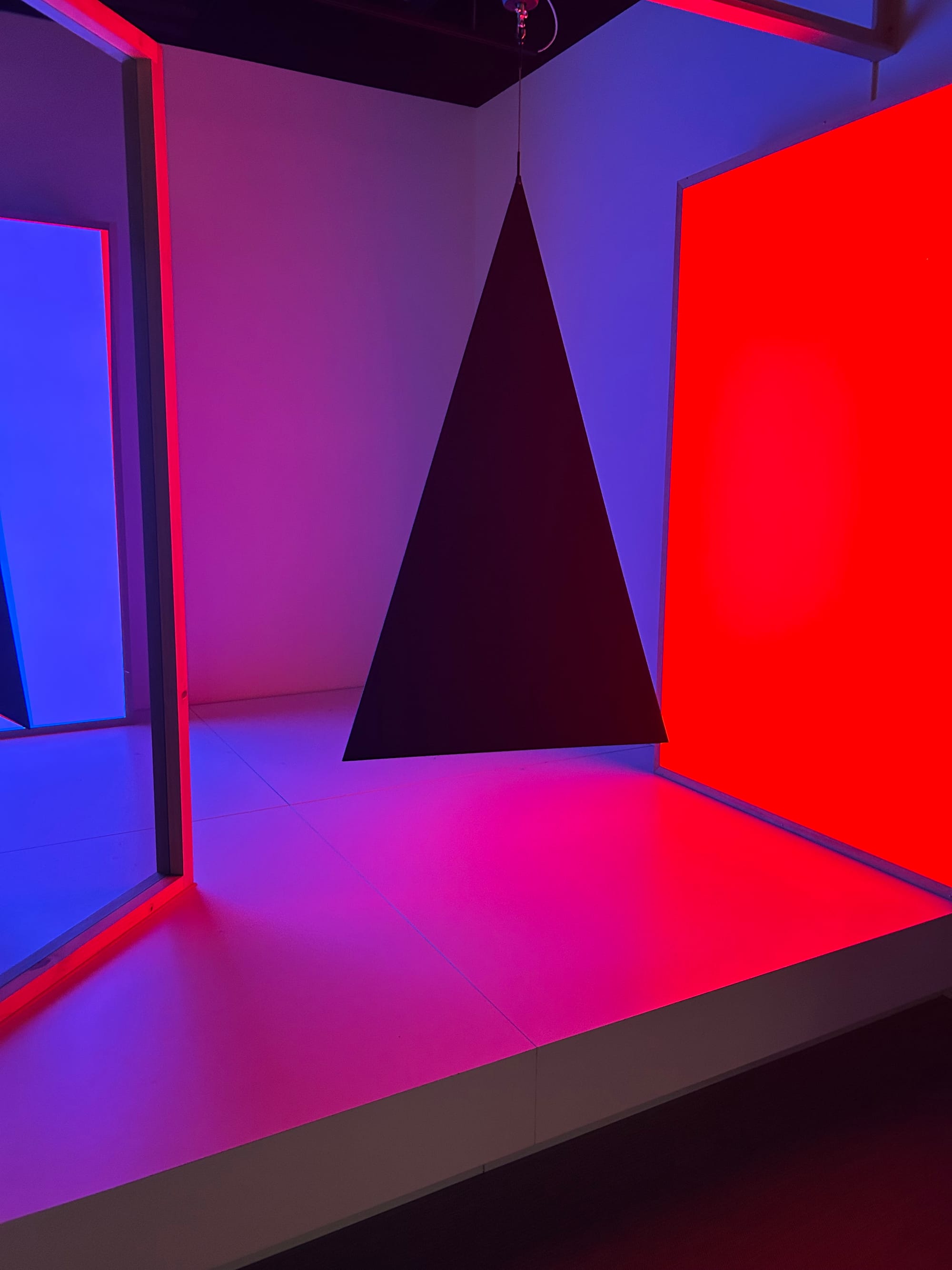
Transitioning away from the fundamentals of light, reflection, shadow and movement that began the exhibition, viewers are led seamlessly into the world of early cinema. Reels of film are laid out for size comparison and single frames drenched in bright colours show the introduction of colour into a previously black and white on-screen world.
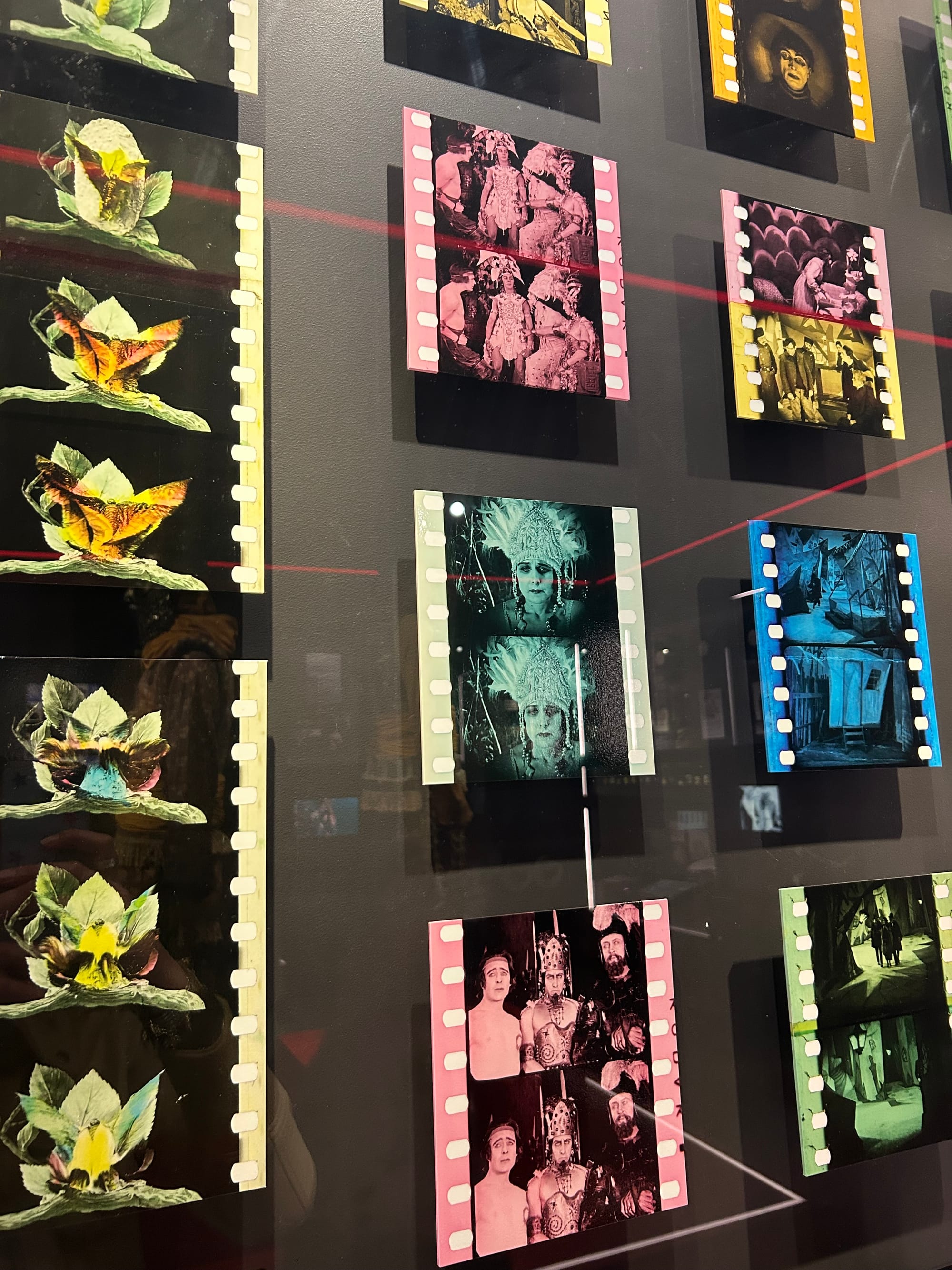
“We wanted to take a media archaeological approach, which is a way of understanding new and emerging media through looking at the past, so looking at old technologies,” Evans said.
Standing proud alongside its counterparts in one room, is the Model 621 Sound Projector. This particular projector originated in England between 1940-1947, but by 1951 had found its way onto a rural sheep station in South Australia. There, this piece of moving image history was used to entertain workers in the shearing shed.
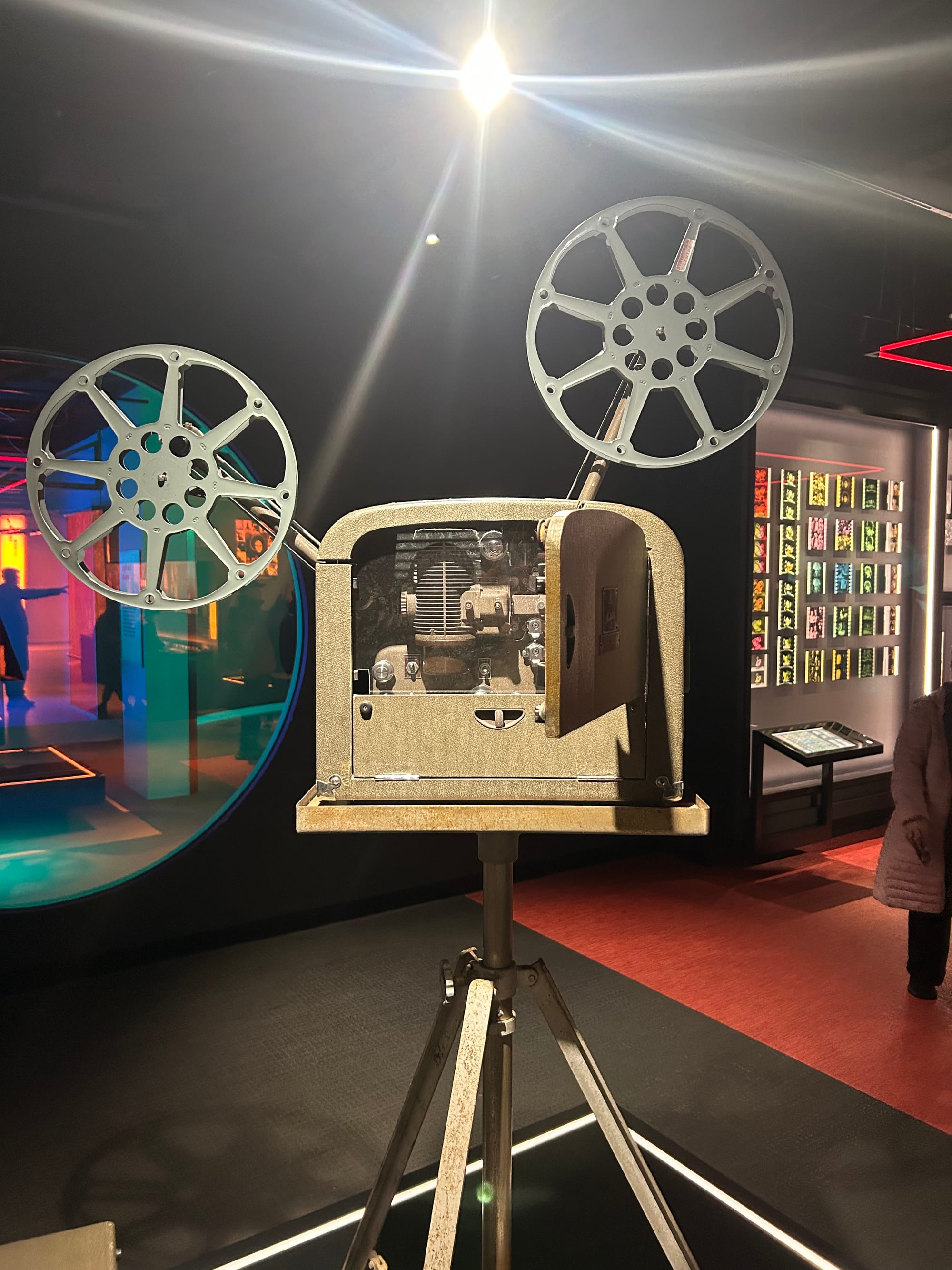
Another object with an intriguing origin story is a type of rudimentary image projector called a Magic Lantern. To source the artefact, a curator joined a “magic lantern society" spending a year finding one in a robust enough condition to showcase.
Further in, we get a more detailed look at Australian identity on screen. A replica of the glorious V8 Interceptor from Mad Max (1979) creates a gravitational pull to the room's centre. In its orbit are works from the Australian New Wave film movement, recorded interviews with Australian screen legends and a live-action take on a violent video game, where the goal is to secure Australian arts funding.
A dark room titled the Memory Garden details how smartphones and social media have facilitated a rise of filmed and shared personal moments. This modern development is tracked back to the first ever film Roundhay Garden Scene (1888) by Louis Le Prince, a prototypical ‘home video’ of his family in their garden.
Home videos from the ACMI collection are combined with films from the Koori Oral History Program and displayed via projections small enough to be seen on the palm of your hand.
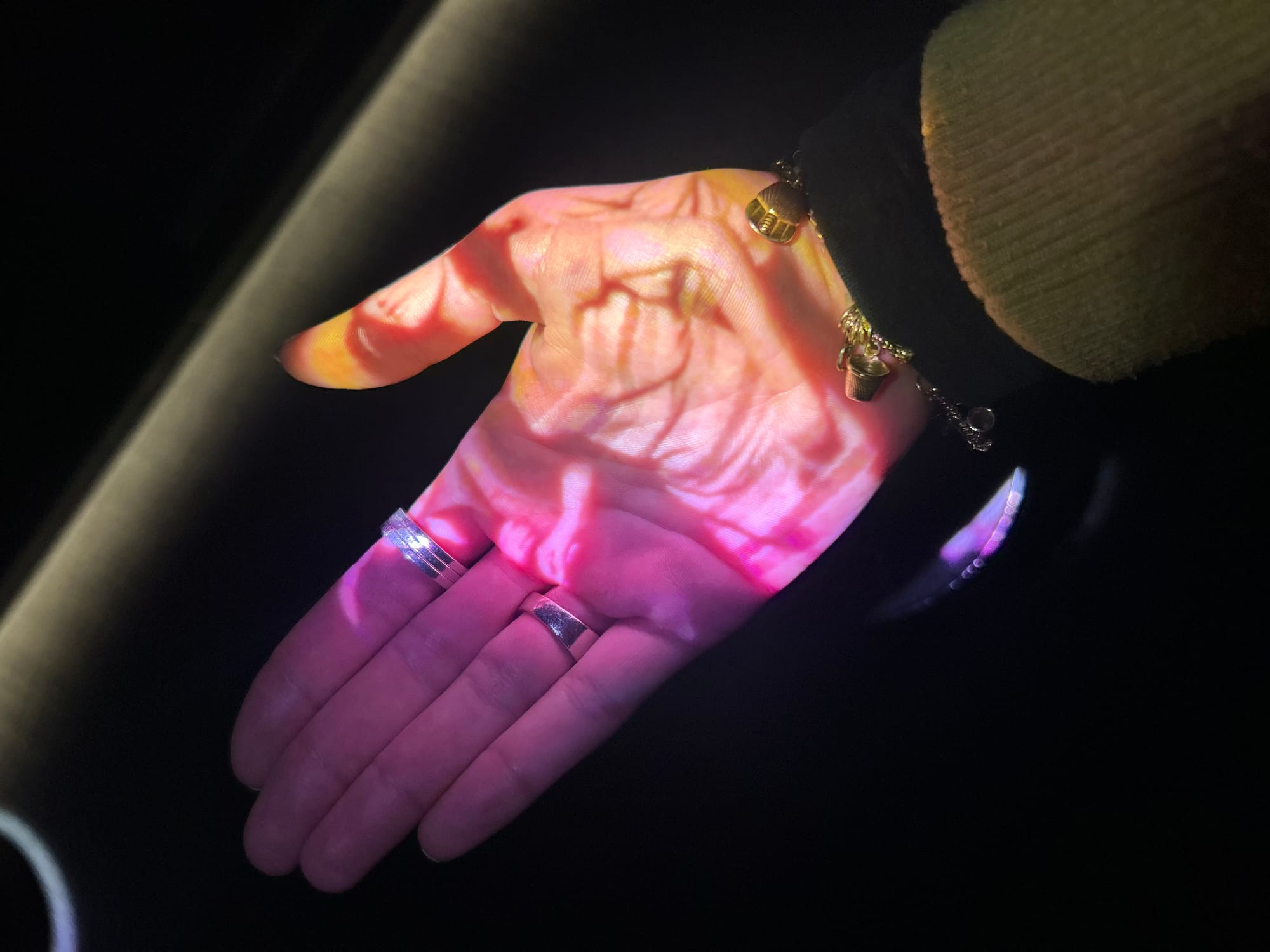
“When you think of history and all these major moments in history… it’s so lovely to think about personal histories as well”, Evans said.
Rounding off the exhibition is The Constellation, a “large-scale digital experience” which shows how each piece in the exhibition connects to other parts of the moving image universe.
Evans said COVID-19, while causing delays in the groundwork of the exhibition, also gave the curatorial team time to expand the scope of its written elements and create the grouping of moving image works seen in The Constellation.
Dots representing the pieces float around like stars before organising into various categories, timelines and pairings. The personalised lens can also be used to see the links between your collected films, TV shows, video games and artwork, and the rest of the collection.
Seeing elements of the screen-world past and present, deconstructed, explained and then linked back together again, forms a fascinating web of art, history and technology.


