

Meet the Cambodian radio show combating domestic violence over the airwaves
By Alice Pohlner This is the fourth article in a special four part series on domestic violence in Cambodia. Read the other articles in this series here. It’s Wednesday morning in Kratie, in Cambodia’s northeast, and there’s a female voice on...


By Alice Pohlner
This is the fourth article in a special four part series on domestic violence in Cambodia. Read the other articles in this series here.
It’s Wednesday morning in Kratie, in Cambodia’s northeast, and there’s a female voice on the radio discussing a confronting topic.
The voice is Mol Dany, and she’s talking about domestic violence.
The program is We Can Do It, a show that specifically targets domestic violence in Cambodia.
The show is conducted by Women’s Community Voices radio station FM89.50 and is based out of Kratie province in eastern Cambodia and also broadcasts to four other provinces across the country, Battambang, Kampot, Kampong Cham and Siem Reap.
Executive Director of FM89.50 Samrith Tona said all involved in the production of the program aimed to empower women by talking about the “silent issue” of domestic violence.
“We compare women of today to women before and show them what they can do now and we encourage them that it has changed from before,” Mr Samrith said.
“Women can be village chief, district chief, province chief or province governor.
“We make some program to let them know women can do what men do.”
Mr Tona said the program was broken down into four sections to appeal to a wider audience.
“The first part is about stories in the news about the violence against women and the presenters talk about it,” he said.
“Then the presenters talk about the [issue of] violence against women and what it is so people know.
“Then the people call the radio station and talk about what happened to them and the callers can give a poem or song to empower the women more.”
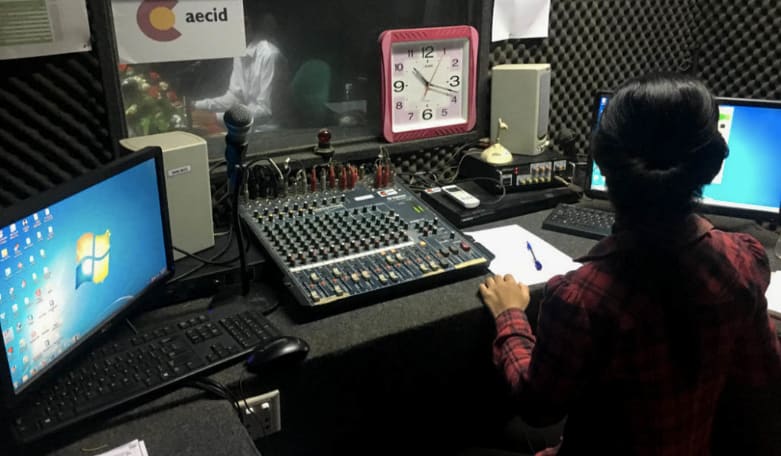
According to a report by ABC International Development, female listeners said they benefited the most from hearing stories of gender-based violence victims.
Men said they prefer the informative segment Do you know? as it helps them understand if they are guilty of violence against women.
Senior radio manager, presenter and producer Mol Dany and journalist Sun Sokung host the program each week.
Mr Sun said a challenging aspect initially was gaining trust from women in order to have them voice their stories on air.
“At first the woman might be afraid but now they are very happy when we interview them and we try to help them and sometimes they feel empowerment in their community for coming forward,” Mr Sun said.
“We want them to be safe and comfortable in their community.”
Mr Sun said many women who have experienced domestic violence had aspirations to resolve the issues for their families however, a lot had admitted to being afraid of reporting their situations to authorities.
He said the program, which keeps the identity of the callers anonymous, helped them determine the most efficient solution with the least amount of ramifications.
“It is very important to not identify the victim because it can affect their family,” Mr Sun said.
Ms Mol said before the program began, a conversation about domestic violence was almost unheard of in Cambodia but women and even men were now speaking up and reporting cases to police.
“The program helps people understand about violence against women and sometimes the girl might ring up and we tell her to tell police because they didn’t know that is what to do,” Mrs Mol said.
“This program is a special program because we try to provide answers to people so we have professionals like police talking.
“Sometimes the police in Cambodia are corrupt so people don’t report but we do this program to help and hope police listen and understand it is important to stop the violence against women.”
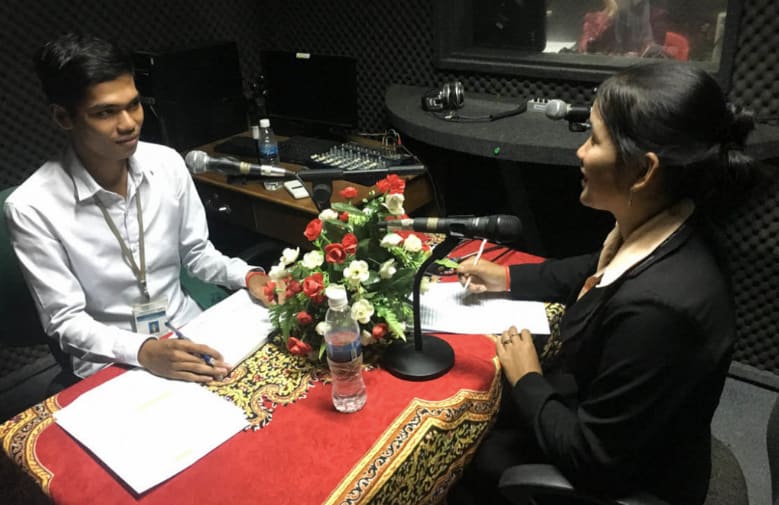
ABC International Development and Cambodian Communication Assistance Project also support the program, which was rebranded to We Can Do It when Australian Aid took over the financial support almost three years ago.
Team leader at ABC International Development in Phnom Penh Viveahhneata Rath said the program had been successful in highlighting the magnitude of domestic violence as an issue in Cambodia.
“In the media in Cambodia there is a lot of victim blaming, so people often ignore a story about a man who was drunk and committed a crime against a woman wearing sexy clothes,” Mr Viveahhneata said.
“The aim of the radio program is to bring the issue back into conversation and it covers different areas such as the responsiveness of authorities and the services available to victims.
“We don’t want to sensationalise the story and traumatise the victims by making them relive the abuse or rape, we just want to focus on authorities and the services available.”
Mr Viveahhneata said a long-term goal was to not only speak about individual cases but also work with entire communities to help end violence against women.
It is unclear the exact outreach the program has but as at May 2015, the program had received calls from more than 1000 men and women to talk about gender-based violence in their communities.
Mr Samrith said the program was generating more popularity as each week the number of callers increased.


