


If the right to protest is in peril, what does it mean for generations to come?
Australian jurisdictions have moved to restrict the right to protest, a key democratic right.

Being a law-abiding protestor in Australia has become more difficult, with legal experts and student activists fearing the right to protest is slowly being eroded.
An analysis of anti-protest legislation introduced in parliaments across Australia by the Human Rights Law Centre concluded the “right to protest is in peril”.
The report, published in 2024, found 49 laws had been passed in the last two decades constricting the right to protest, with NSW introducing the most.
Deakin University associate professor of law Dr Maria O’Sullivan said many of these laws were influenced by lobby groups, such as mining companies, and target specific forms of disruptive protests such as climate activism.
“Protest repression used to occur more sporadically … but over the last decade or so, we have seen a more consistent trend in states restricting protests in response to powerful lobbying,” Dr O’Sullivan said.

States tightening protest laws
Last year, the Victorian Government introduced new legislation aimed to crack down on “violent and radical behaviour at protests”.
The law gives the police new powers to unmask protesters as well as bans the use of symbols used by terrorist organisations and the use of attachment devices like glue, rope or locks – the kind often used in non-violent action by environmental activists.
The act also creates a "safe access area" around places of worship to prohibit protests.
Human rights groups have criticised these laws for being a dramatic crackdown on protests and further restricting the range of actions Victorians are allowed to take to express legitimate grievances.
In the aftermath of last year’s Bondi terror attack at a Hanukkah celebration that killed 15 people, multiple states have passed laws to restrict mass protests and target hate speech.
The NSW Government introduced controversial legislation giving police the power to restrict public protests for up to three months after a terrorist incident.
In March, the Queensland Government made a last-minute change to its hate speech legislation, banning two phrases deemed antisemitic.
The legislation specifically outlaws the expressions “from the river to the sea” and “globalise the intifada".
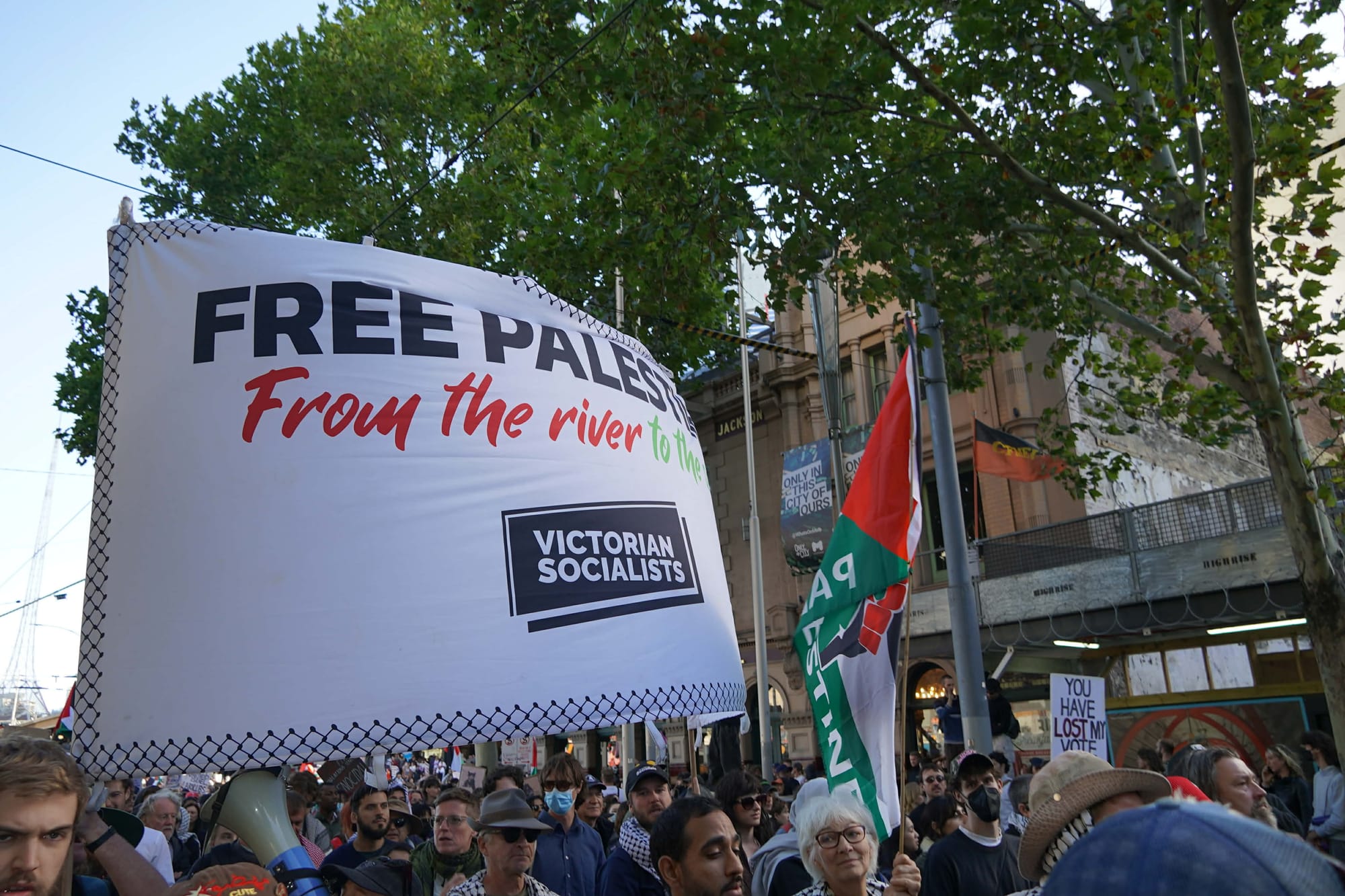
The banning of the contested phrases has been criticised by the Queensland Council for Civil Liberties for both its assault on free speech and the hasty manner in which it was passed through parliament.
Dr O’Sullivan said the reactive nature of protest laws leads to rushed legislation, which can sometimes be unconstitutional.
“The problem with the reactive nature of protest legislation is it gives stakeholders very little time to voice their concerns … which leads to court challenges.”
Activist groups have made a number of challenges to restrictions imposed by state governments, each with a varying degree of success.
The NSW Supreme Court of Appeal recently ruled against anti-protest provisions introduced by the NSW Government after last year's Bondi terror attack, which restricted the rally against Israeli President Isaac Herzog’s visit to Sydney earlier this year.
The laws were ruled to have "impermissibly burdened" the implied freedom of political communication in Australia’s constitution.
Dr O’Sullivan said the broadening of police powers by multiple state governments will likely have a “chilling effect”, deterring marginalised groups from attending protests and exercising their right to freedom of expression.
The ‘chilling effect’ on democracy
Monash Student Association education officer Madeline Curkovic said the expansion of police powers has influenced the way police interact with protesters.
“Police are becoming much more aggressive and militarised at protests,” Curkovic said.
Curkovic described young protesters “being pushed and shoved” by police officers in the last student strike for Palestine, which took place on March 11.
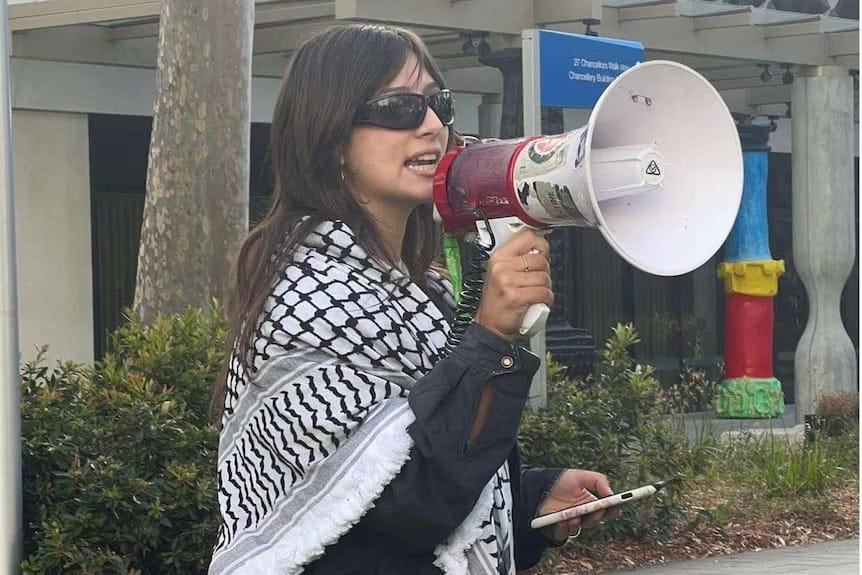
Legal and human rights groups such as Human Rights Watch, Amnesty International and the Australian Democracy Network have raised concerns about the increased use of pepper spray and non-lethal weapons at protests.
The NSW Police watchdog is currently investigating allegations of police brutality during the protest over Herzog’s visit to Sydney last month.
Curkovic said the crackdown of protests by politicians has emboldened police to use more forceful tactics with protesters.
“The demonisation of protests by politicians and the mainstream media sends the political signal that this kind of behaviour is tolerated and even encouraged,” Curkovic said.
RMIT professor of social policy and protest expert Dr Rob Watts said the criminalisation of protests by states over years threatens liberal democracy.
“A vibrant and resilient democracy is contingent on the right to dissent and the civic engagement of young people,” Dr Watts said.
“Currently, this idea of social cohesion is being weaponised by politicians to silence dissent and scrutiny of the government.”

Universities tighten protest restrictions
Curkovic said the tightening of the civic space has also been mirrored on campuses, with more protest restrictions being implemented by Australian universities.
These include bans on indoor protests and restrictions on banners, posters and making non-course related announcements, known as "lecture bashing".
Monash University implemented a new Student Code of Conduct in February last year.
The new code includes a clause that prohibits students from disrupting “orderly conduct of any Monash-related activity”.
The principles for creating safe classrooms also states “staff should not allow non-unit related announcements to be made in classrooms”.
The Monash Student Association (MSA) and National Tertiary Education Union have raised concerns about the implications these protocols may have on campus activism.
A spokesperson for Monash University said the new student code does not prevent students from protesting and supports academic freedom and freedom of speech.
“Student representatives across Monash were invited to contribute to the development of the policy,” the spokesperson said.
"Monash has, and will continue, to engage with students to ensure its policies align with the expectations of our community."
Curkovic said the climate for student activists right now is one of heavy surveillance.
“When we try to book rooms to hold forums about Palestine … [it] will only be accepted if we disclose what our agenda is, what our discussion topics will be and what people will be seeing,” Curkovic said.
“This is unprecedented … [It] has never happened before for any other topic in the three years I have been involved with the MSA.”
Curkovic is worried these new protocols will have a chilling effect on student activism and prevent students and staff from speaking their mind on campus.
Why is campus activism important?
Australian universities have a long legacy of being a site for student activism, from protests against the apartheid in South Africa and Australia’s involvement in the Vietnam War to more recently rallies for Gaza.
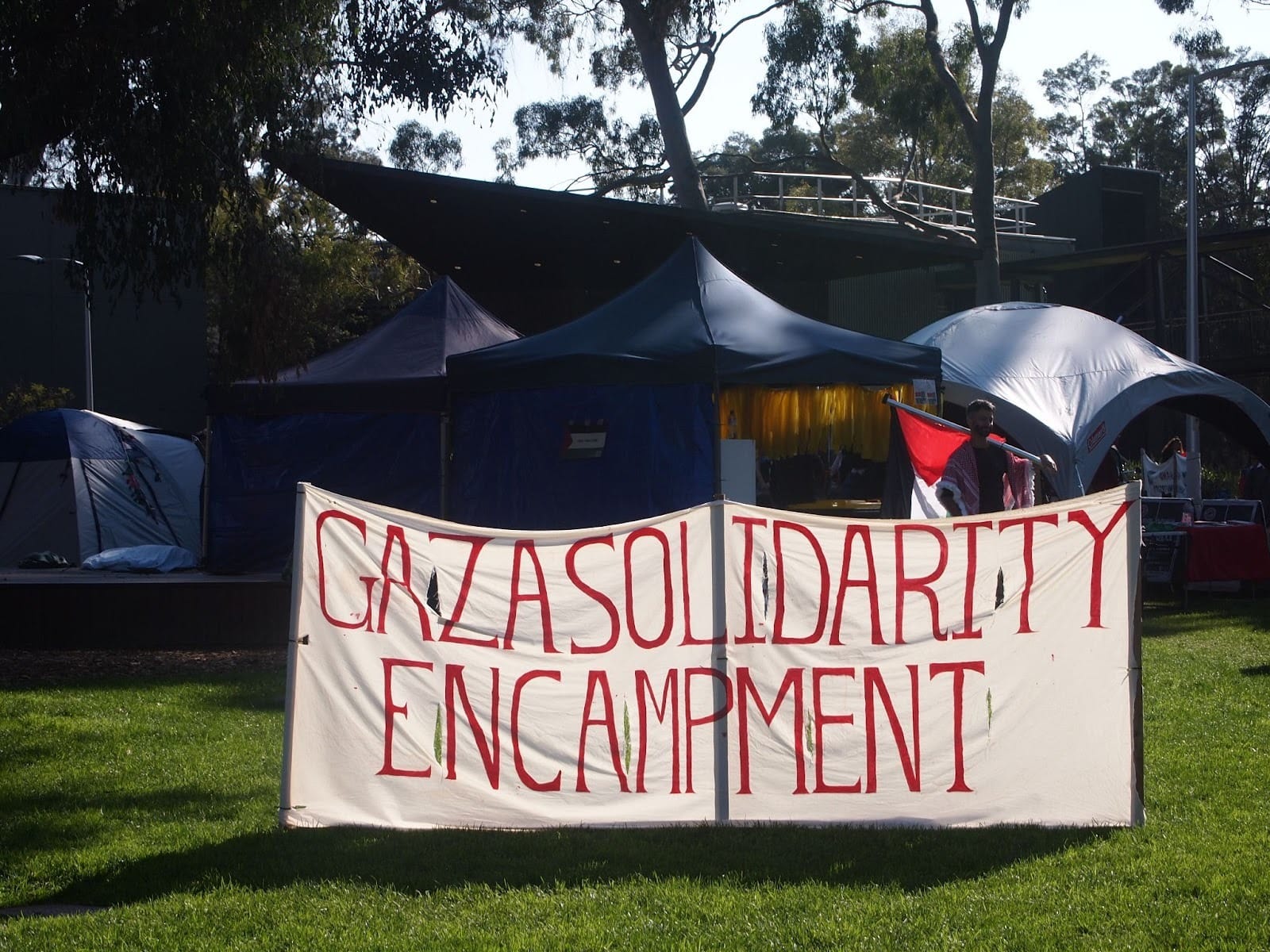
Dr O’Sullivan said while it is important for universities to address the perils of hate speech, campuses should be a space that encourages public debate and facilitates constructive dialogue.
“Universities are public institutions so they are obligated to act in accordance with state human rights charters and consider the right to assembly,” Dr O'Sullivan said.
“Restrictions imposed on protests must be proportionate.”
Dr Watts said disruption is not a valid reason to limit free speech or restrict protests.
“It is important universities nurture reasonable political debate and political engagement and show intergenerational solidarity.”
Curkovic said young people often lack decision-making power, so grassroots activism is a way for the youth voice to be heard and represented in politics.
The median age of Australian federal parliamentarians is 50 to 52 years, more than a decade older than the median age of the Australian population, according to a report from independent public policy think tank Per Capita.
“Unless you are a mining company who has millions of dollars to spend to lobby the government, peaceful protest is one of the main ways we can hold the government and universities to account," Curkovic said.
This was reflected last year when Monash University officially ended its contentious partnership with Woodside Energy after a "Stop Woodside" campaign led by students and staff.
Curkovic said the repression of young people’s voices, through protest restriction, has serious implications for future generations to come.
“History has shown us when states crack down on one particular protest, it sets a dangerous precedent for states to do the same to other future protests, whether that be about Palestine, climate change, women rights, queer rights or First Nations justice.”


