


A look back at recent events of the Iran conflict

The United States and Israel launched joint military operations "Operation Epic Fury" and "Operation Roaring Lion" against Iran on February 28, marking a dramatic escalation in the Middle East.
Washington described the strikes as necessary to "eliminate the imminent threat" of Iran's nuclear program, while Tehran condemned it as a "dangerous act of aggression".
Yet just hours before the explosions rocked Tehran, diplomats in Geneva were cautiously optimistic that a peaceful resolution might be within reach.
Preliminary negotiations
In the weeks leading up to the attack, diplomatic channels were unusually active.
Following initial talks in Muscat and Geneva in mid-February, the two sides met for a third round of indirect negotiations in Geneva on February 26.
Omani mediators described the atmosphere as constructive. Talks lasted approximately six hours, with Iranian officials signalling a willingness to compromise on certain technical aspects of the nuclear program.
But beneath the surface of diplomatic progress, a military clock was ticking.
As negotiators talked in Geneva, US sent its aircraft carrier to the region, the USS Ford. The scheduled March 2 technical meeting never took place.
By the time Iranian negotiators were due to board their flight, Iran's Supreme Leader had been killed in the airstrikes, and any prospect of a return to the negotiating table had evaporated.
On March 2, Tehran announced it would hold "no further negotiations" with the United States.
As of March 20, Iranian officials have reiterated they have no plans to resume talks with Washington, describing ceasefire rumours as "false information" spread by the US to control energy prices .
Military operation begins
On February 28, the US and Israel launched a coordinated strike with Israeli forces leading and US forces following.
Israel attacked Hezbollah in Lebanon the previous day to disrupt detection systems.
Approximately 200 Israeli fighter jets simultaneously attacked some 500 Iranian targets — the largest operation in Israeli Air Force history.
US President Donald Trump commanded the operation from his Mar-a-Lago residence in Florida.
Hundreds of targets across 28 Iranian regions were hit. Seven missiles struck the presidential palace and the area near Khamenei's residence.
The most distressing civilian casualty was a girls' primary school in Hormozgan Province, where 64 civilians were killed and 92 injured.
US Defense Secretary Pete Hegseth denied intentionally targeting civilians, saying only that the US was “investigating” the incident, and stated: “Of course we wouldn’t target civilian targets”.
The Strait of Hormuz crisis
The conflict's most far-reaching impact has been on global energy.
Following Iran's closure of the Strait of Hormuz — the world's most critical energy chokepoint — commercial shipping traffic plunged 90 per cent from an average of 138 vessels daily to just four on March 3.
Major shippers including Hapag-Lloyd, CMA CGM and Maersk have suspended Gulf transits and rerouted around the Cape of Good Hope, adding 10 to 20 days to delivery times and inflating transport costs.
The strait normally handles about 20 million barrels of oil per day — roughly 20 per cent of global petroleum consumption.
China alone consumes 5.3 million barrels transiting through the waterway daily, followed by India at 2 million barrels, Japan and South Korea at 1.7 million barrels each.
Major oil producers face severe constraints. Iraq's Basra Port, with a daily capacity of 3.5 million barrels, handled zero crude oil on Monday. JP Morgan analysts warn that if the disruption persists for 21 days, regional producers will be forced to shut down facilities.
Iran has also targeted regional energy infrastructure. Drone strikes hit Saudi Aramco facilities in Ras Tanura, and QatarEnergy reportedly halted production at its Ras Laffan LNG facility, deepening global fears of a severe market tightening.
Domestic impact in Iran
While Iran has restored some internet connectivity, international access remains limited.
A cyberattack on March 18, reportedly by an Israel-linked hacker group, paralysed approximately 70 per cent of Iran's petrol stations, affecting some 4,300 sites.
The attack targeted the government system responsible for fuel subsidies, causing chaos and long queues.
Iran's Oil Ministry stated over 30 per cent of gas stations remain in service, but fuel shortages have worsened, with black market prices reportedly surging.
Australians and other foreign residents face ongoing anxiety amid the disruptions.
Iran's response
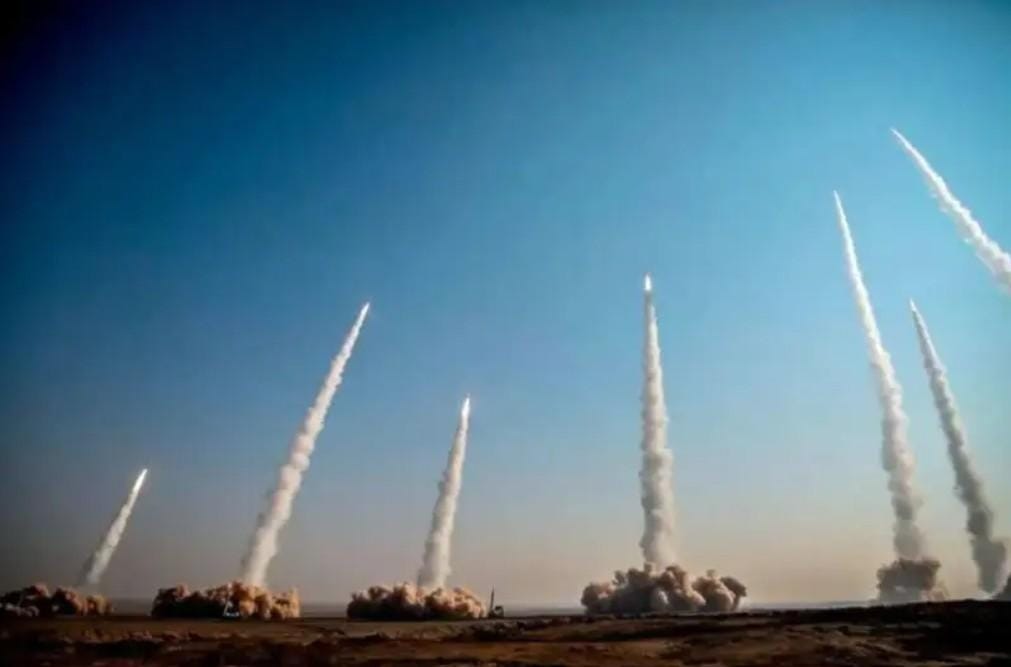
Iran's Islamic Revolutionary Guard Corps launched "Operation True Promise-4", firing missiles and drones at targets in Israel and US military bases across the region, including the Fifth Fleet Command in Bahrain and Al Udeid Air Base in Qatar. IRGC claimed to have destroyed a US FP132 radar system in Qatar. Iranian officials stated their response "has no red lines".
Iranian Foreign Minister Araghchi told CBS on March 15 that Iran never requested a ceasefire and sees little value in returning to negotiations with the US, noting "this would be the second time" Washington struck while talks were underway.
He added that before the war, Iran had made significant concessions, offering to dilute its 60-per-cent enriched uranium to demonstrate it seeks no nuclear weapons.
Global implications

Associate Professor Ben MacQueen from Monash University argues the strikes represent a fundamental shift in the international order.
Unlike previous administrations that sought to legitimise military action within international law, "Trump's just gone in and just gone around them, broken them, smashed them", McQueen says.
"He doesn't really care about them."
MacQueen argues that this, alongside the Russian invasion of Ukraine, marks a departure from the post-World War II rules-based order.
Airline disruptions
Following the conflict's outbreak, Middle Eastern countries closed airspaces and imposed strict flight restrictions.
At the time of the conflict, approximately 115,000 Australian citizens were in the Middle East, with about 24,000 stranded in the UAE — the largest consular crisis Australia has faced.
By March 9, more than 3,000 Australians had returned via 21 direct flights, with the "vast majority" of stranded passengers now departed.
Australia's balancing act
The Australian Government adopted a position of "understanding" the US action while ruling out military participation.
On March 16, Energy Minister Chris Bowen activated Australia's strategic fuel reserve, releasing up to 762 million liters of petrol and diesel — 20 per cent of the baseline stockpile — to address supply disruptions.
Bowen also temporarily raised allowable sulfur levels to allow an extra 100 million litres per month of petrol supply.
Bowen emphasised that every expected fuel ship has arrived in Australia and deliveries are expected to continue "well into April".
He labelled panic-buying "un-Australian" and warned against filling jerry cans, noting that while Australia's fuel supply remains secure, global oil prices will stay elevated "for the foreseeable future" due to Middle East uncertainty.
This crisis began in the Gulf, but its effects are now felt at every Australian Petrol Pump. It remains unclear when — or how — the conflict might end.


