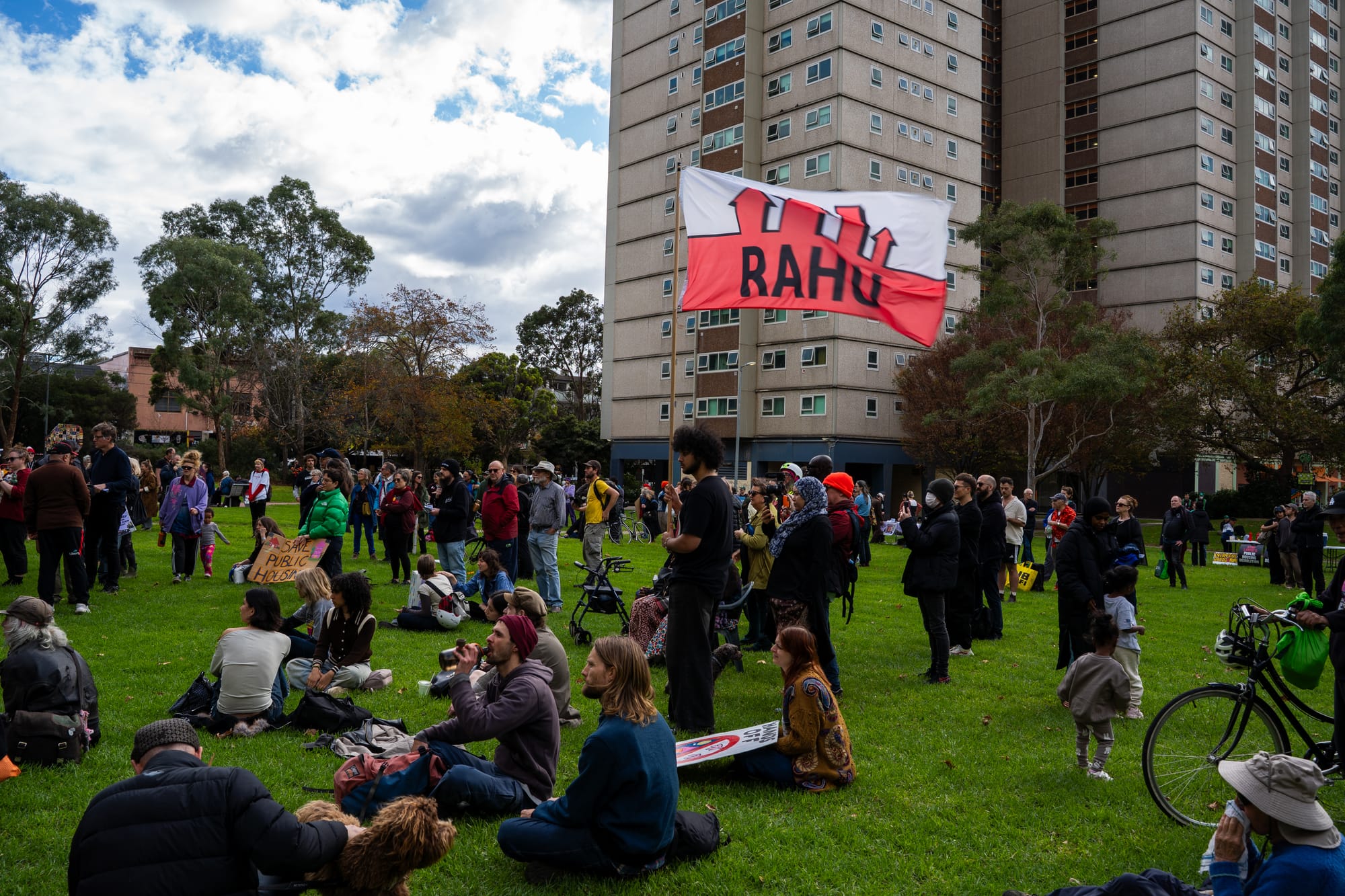

Residents gather en masse to defend public housing
The Victorian government has announced a plan to redevelop public housing but local residents are pushing back.


On May 30 2026, beneath the columns of Melbourne's State Library, handmade signs rose above the crowd in defence of something far greater than just buildings. They had gathered to defend the communities they believed public housing makes possible.
As a testament to free speech and democratic rights, protestors demanded the city listen to their rally cries: “What do you do when public housing is under attack? Stand up and fight back!”
The protest was filled with stories of loss, resistance and belonging. One by one, speakers from diverse backgrounds took the microphone.
Residents spoke about being forced from their homes. Activists challenged the government's redevelopment plans. Politicians argued for a different vision of housing. Then came the final speaker.
Former public housing resident, independent senator and proud First Nations woman, Lidia Thorpe, told the crowd that public housing had shaped her life.
"The high-rise kept me safe. I wouldn't be a senator today without public housing," Senator Thorpe said.
"I had a community that loved me”.

Thorpe's story is one of many that fuel a growing movement to defend public housing in Melbourne.
Thorpe said the redevelopment program was not just about buildings, but also about the loss of communities that "love and look after one another every day."
Demolishing a community
In September 2023, the Victorian Government announced plans to demolish and redevelop all 44 public housing towers by 2051, replacing them with a mix of public, community and affordable housing.
Former Premier Daniel Andrews and housing ministers declared the structures outdated, old, and "no longer fit for purpose". Andrews pledged the project would deliver modern, energy-efficient housing while increasing the number of social housing dwellings across the sites.
The redevelopment will continue over decades, with thousands of residents expected to relocate during the process.
Campaigners said the increasing role of community housing providers and private developers has resulted in a gradual retreat from publicly-owned housing.
Some fear the loss of homes and long-standing communities. Others see the redevelopment as part of a broader shift away from public ownership. Together, the protestors fight to not only to save the towers and their longstanding communities, but to defend the idea that housing should remain a public good.
Secretary of the Victorian Renters and Housing Union (RAHU), Adu Hani, said Melbourne’s public housing, particularly the towers, has a deeply established sense of community that many residents fear losing.
“All these people will lose their forever home,” Hani said.
Victorian Government reports said the redevelopment program aims to increase housing capacity across the selected sites from 10,000 to about 30,000 residents by 2051.
Homes Victoria, the agency overseeing the project, said residents will receive notice ahead of demolitions and support during relocation. Homes Victoria declined to comment on this story.
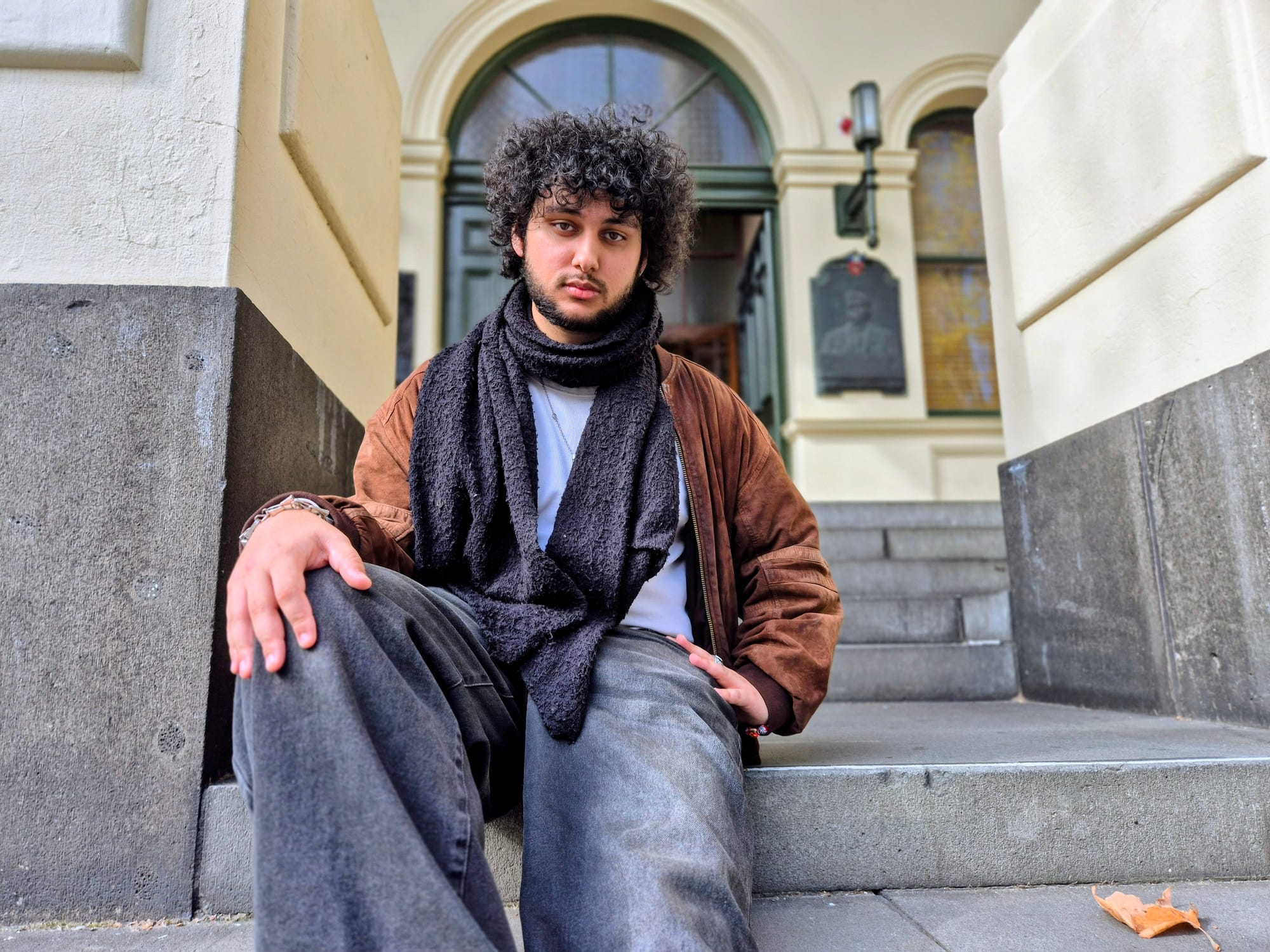
Hani said residents were given inadequate warning and relocation support during the initial phase of the program.
“Residents found out on the day it was announced that their home was going to be demolished," Hani said.
“There’s been no real dialogue, no real consultation, so it's probably one of the biggest impediments, and I think violations of the people who actually live in the towers."
“First step forward, first and foremost, is to consult the residents and ensure they have a democratic say in what happens with the buildings," Hani said.
For the protesters outside the State Library, that belief was the driving force behind a growing movement to defend public housing across Melbourne.
Residents' democratic say
One of these residents, and a speaker at the protest, was Jeannie Erceg. A public housing resident for over 20 years, Erceg said her family had been displaced twice in two years.
“When they say they're going to be demolished, we didn't know where we were going to go,” Erceg said.
“It was very distressing for everybody”.
Erceg expressed her sadness for the community her family lost during the redevelopment process.
“I was there 24 years... so it was a community. I mean, they [Erceg’s children] all went to the local kindergarten, the local primary schools, the local high school."
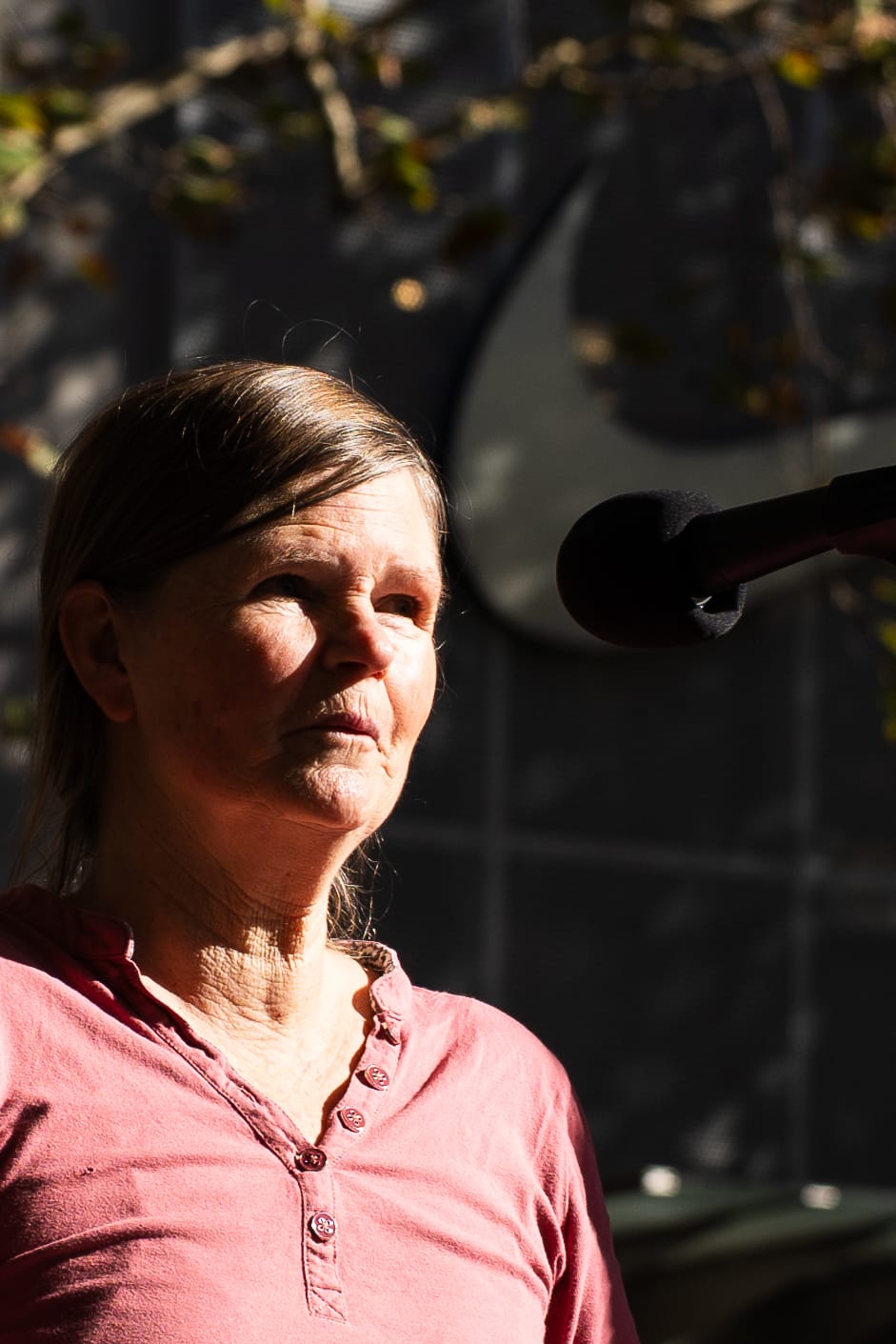
Erceg, like many community members, decided to organise against the demolitions they saw as destroying their community.
"My concern is that public housing will be slowly demolished, tower by tower, house by house until there's none left."
Erceg argued for the government to put communities first, and work on fixing what was broken, instead of removing homes entirely.
“Public housing should not be demolished. We should repair and reinvest in it. There was a study done that said the government could save millions by just redeveloping these properties instead of demolishing them, and we wouldn't have to uproot families from the communities.”
That study, The Retain, Repair, Reinvest (RRR) study for the Barak Beacon Estate in Port Melbourne shows that fixing old public housing instead of tearing it down saves money, keeps communities together, and cuts carbon waste.
As demolitions continue, communities, activists and politicians said they refused to watch in silence.
How to defend public housing
As the morning rolled into the afternoon, trumpets of car horns blared, some in support, others in annoyance. The rally pressed on from the CBD towards the northern suburbs.
An unexpected figure walked side by side with activists: South Australian Senator Barbara Pocock. The Green's housing spokesperson blended in with the protestors, wielding a handmade sign.
Senator Pocock travelled to Melbourne to attend the rally and hear stories about how public housing has changed lives.
“I'm walking along in this rally, and I'm hearing story after story about how public housing changes lives. It's the basis for employment, it's the basis for your health, security and your family,” Senator Pocock said.
“Here we are marching, because the Victorian Government is going to knock down 10,000 homes in a housing crisis. If we don't build public housing, we tip people into homelessness. We tip people into poor health."
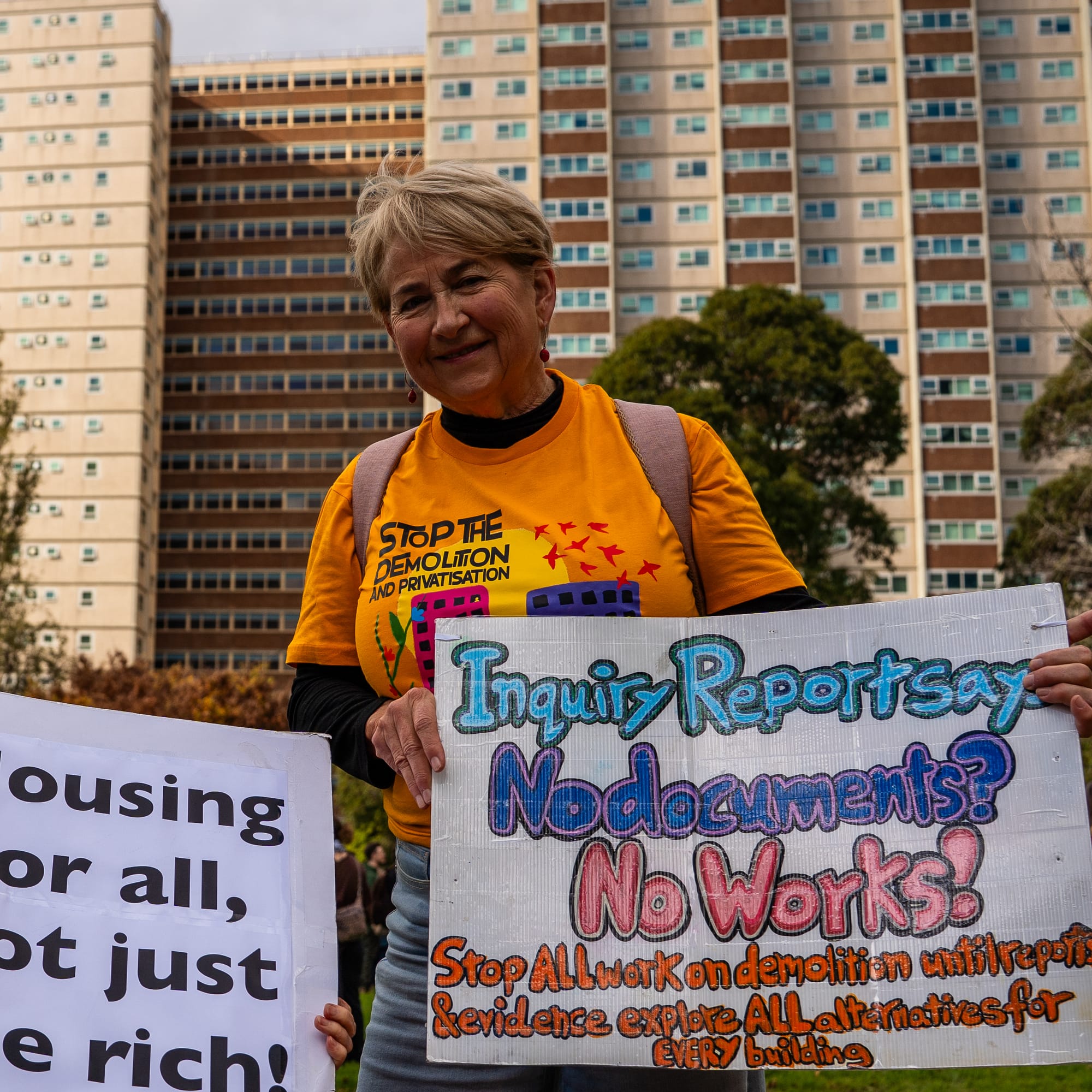
Senator Pocock’s warning is reflected by recent housing research by Homelessness Australia, which found the housing crisis is increasingly driving homelessness and declining wellbeing.
“We are doing a lot of things to humans that make their lives so hard and widen inequality," Senator Pocock said.
“People need to get out there and vote for a decent housing policy."
Residents organise and refuse to be silenced
As the protesters marched through Gertrude Street in Fitzroy, four towers loomed. Four of the forty-four towers set for demolition.
Fitzroy's Atherton Gardens estate was buzzing with activity. Community barbecues and events were being held as the protesters set up camp.
R-Coo Tran, former resident of the Carlton Public Housing tower and founder of 44 Flats United, was one of the leaders organising residents to fight back against planned demolitions. Tran has been on the front lines of the campaign since the announcement of the demolitions.
"From the very beginning, this was never a fair fight between public housing residents and the state government," Tran said.
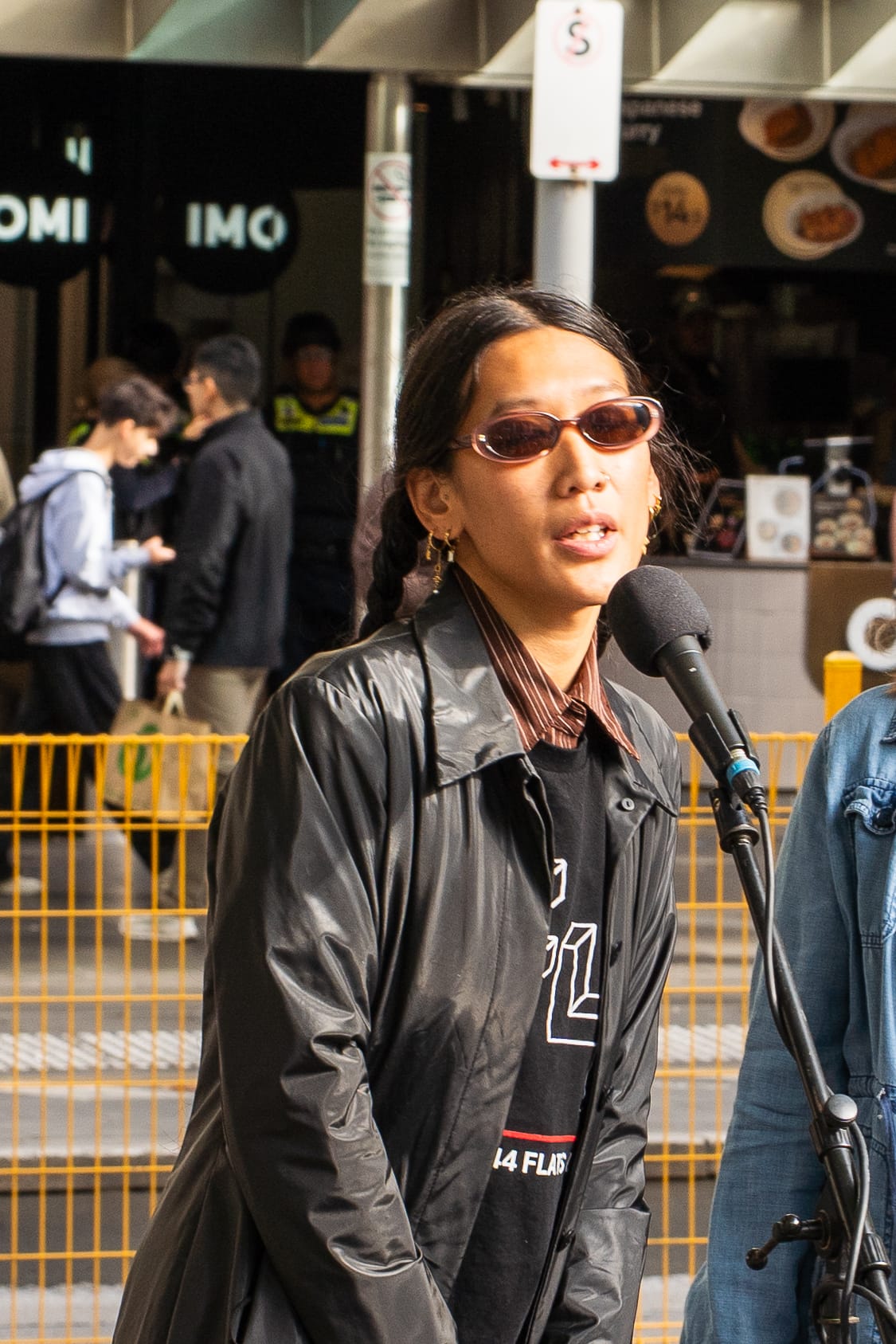
For Tran, this fight went beyond simple politics and addressed the human rights at risk.
With support from 44 Flats United, the residents organised, filing a class action in the Supreme Court, arguing the Victorian Human Rights Charter had been breached by the government.
Supreme Court Justice Melinda Richards dismissed the case.
"The ruling that the Supreme Court judge made in the end was essentially that the human rights of people in the high-rises don't matter, because this is for the greater good of all Victorians," Tran said.
"It made people, who already feel small, feel even smaller and insignificant."
Tran praised residents' drive to keep fighting.
"Seeing people who are already vulnerable, who are generally incredibly stressed and anxious because they've got the threat of demolition and forced displacement looming over their heads, seeing those individuals getting together and collectively organising against this is the most inspiring part of all this."
The fight to defend these towers means more to Tran than the preservation of her former home; it’s about the legacy of public housing.
"Public housing has saved us, but it's also so important for future generations to come too."
The protest concluded once the sun disappeared behind the towers on Gertrude Street. While demolitions continue, what is clear is the fight to stop them remains.