


Deepfakes, ragebait and political slop: Social media in the Victorian election

Since the advent of social media, major platforms have had increasing influence on political campaigns and elections across the globe.
With the Victorian state election looming it's important to consider how social media is being used across the Australian political landscape.
Using social media platforms, primarily Instagram and Tiktok, both major parties, The Greens and One Nation have scrambled to tap into strategies aimed at engaging viewers using algorithm favoured content while communicating key policy information.
Prolific posting and humour are crucial to this new form of digital campaigning, especially on TikTok where the virality of videos corresponds with exaggerated sounds and imagery.
Impact on younger voters
According to research by the University of Canberra 57 per cent of people aged between 18 and 24 said “their main source of election information was social media”.
Over 4.7 million Victorians are enrolled to vote. The Gen Z and Millennial vote is key to deciding this election outcome, with voters aged 18-44 making up 44 per cent of the vote.
A 2026 report from the Australian Communications and Media Authority shows that an increasing number of older Australians use social media, too.
With such a large number of voters now using social media as their primary source for news and political information, parties must find new ways to appeal to prospective voters online.
So how effective are the parties' social media strategies?
A vast amount of the Liberal’s content is devoted to ridiculing the Carroll Government in various ways, a campaign tactic that is far from new, but which finds particular success in a digital landscape fuelled by rage-bait and meme culture.
The Victorian Liberal Instagram page is nothing to write home about, attracting a relatively small amount of views and followers. However, the party has been getting more attention via the Instagram accounts of individual MPs. This is no great surprise as algorithms and viewers tend to favour more personalised ‘face-to-face’ content.
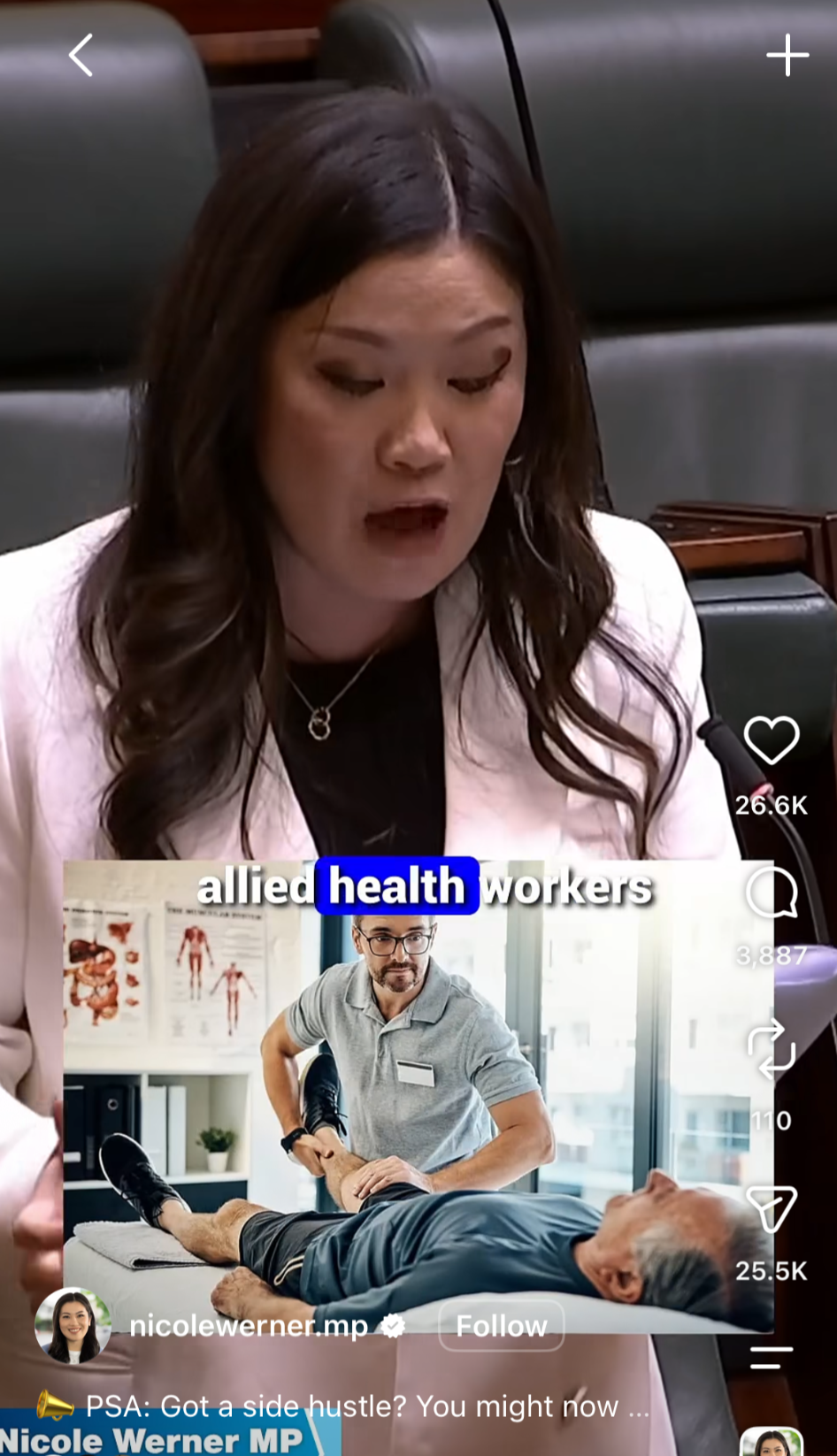
One such figure is Nicole Werner the Liberal MP for Warrandyte.
Her instagram page, boasting 104,000 followers, is more popular than the social media account of the political party to which she belongs.
Some of her most popular instagram videos are impassioned speeches delivered from her front bench seat in parliament.
These clips tend to do well with any politician due to their highly emotional and evocative nature, another trait that does numbers across the platforms.
Think back to Julia Gillard's famous misogyny speech delivered in 2012 to Tony Abbott.
Labor
Labor has also attempted to cash in on the algorithmic success of certain content types on instagram.
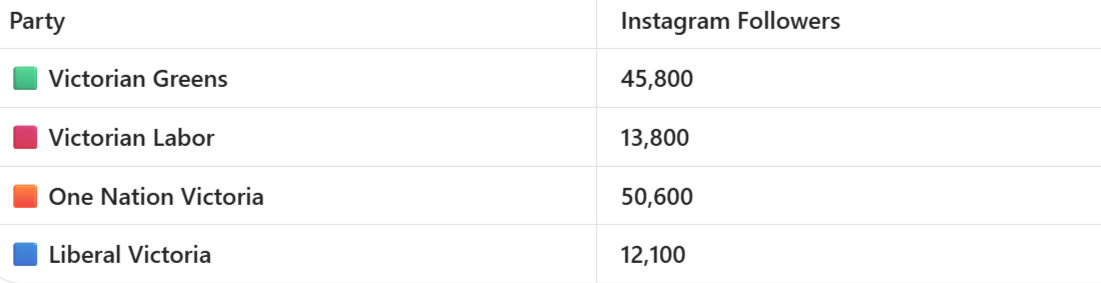
Once again, the results are unremarkable, although the page has accrued slightly more followers than its Liberal counterpart.
Where the two major parties differ is a matter of the online engagement their individual MPs receive.
Ben Carroll for instance, has 16.3k followers compared to Wilson’s 108k, despite Carroll being the current Premier.
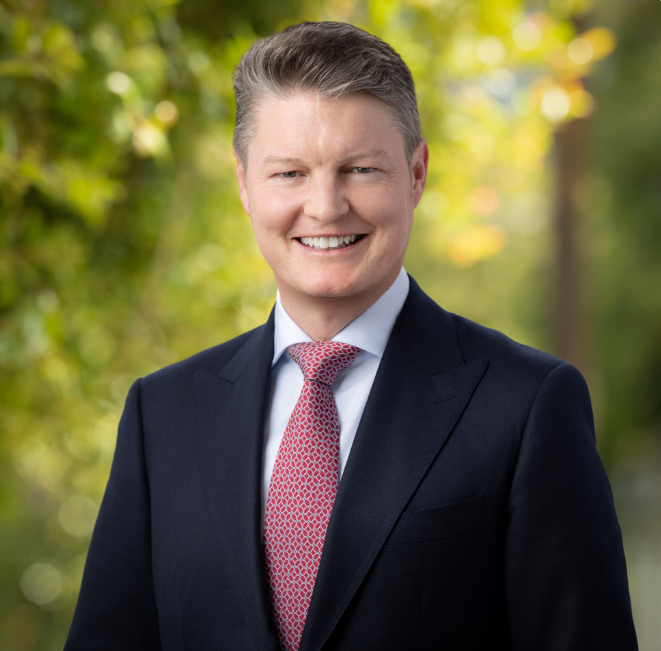
This stark difference however is unsurprising as Carroll, who was only appointed Premier in July, has had far less time to build up the strong social media presence held by his opponent.
Labor seems to have found far more success on TikTok, however.
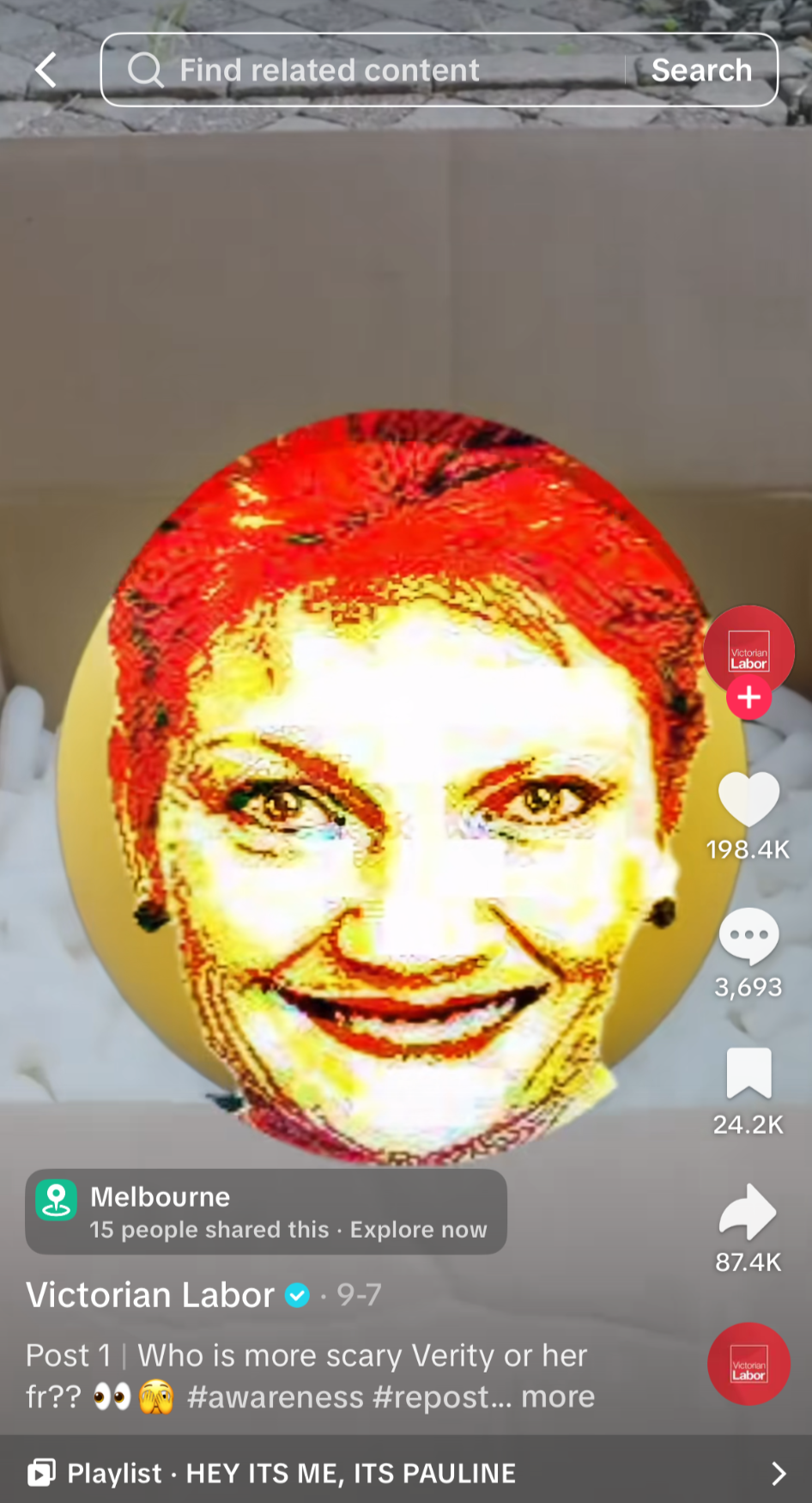
The targeting of younger audiences is evident, with a large portion of the posts devoted to ‘fan’ edits of Carroll or edits ridiculing Jess Wilson and Pauline Hanson.
Whoever runs Labor’s Tiktok is working overtime, mass-producing ‘brain-rot’ style content to fuel the prolific account.
Many videos use pop-culture references, utilising visual and auditory cues that a large population of younger Australians are familiar with, and thus will be more likely to view.
One video references people ‘sleeping on’ GTA VI and Rocket League with the Vic Labor Roblox game comically posed as the preferred option for gamers.
The fact that the party even has a Roblox game reflects the party’s attempt to relate to younger voters by showing their awareness of the everyday young person’s interests.
The Greens
The Greens, as a smaller party with a lower budget, have taken a slightly more face-to-face approach with their social media messaging.
This casual, hand-held-mic feeling is yet another hallmark of social media video content and the more intimate feeling it invokes reflects the people-before-profit policies of the party.
Interestingly, the Victorian Greens have almost four times the followers of both the Victorian Labor and Liberal pages.
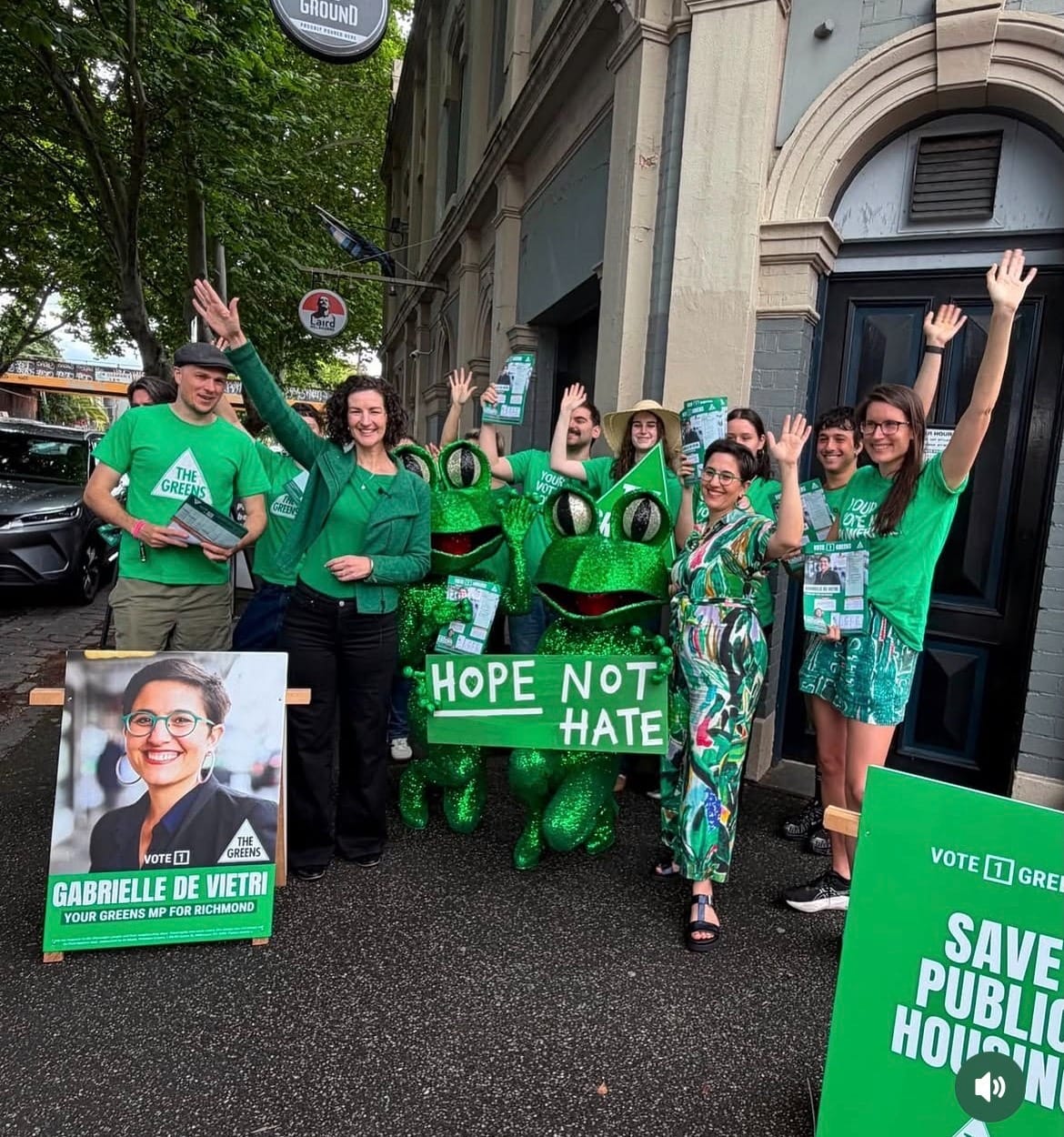
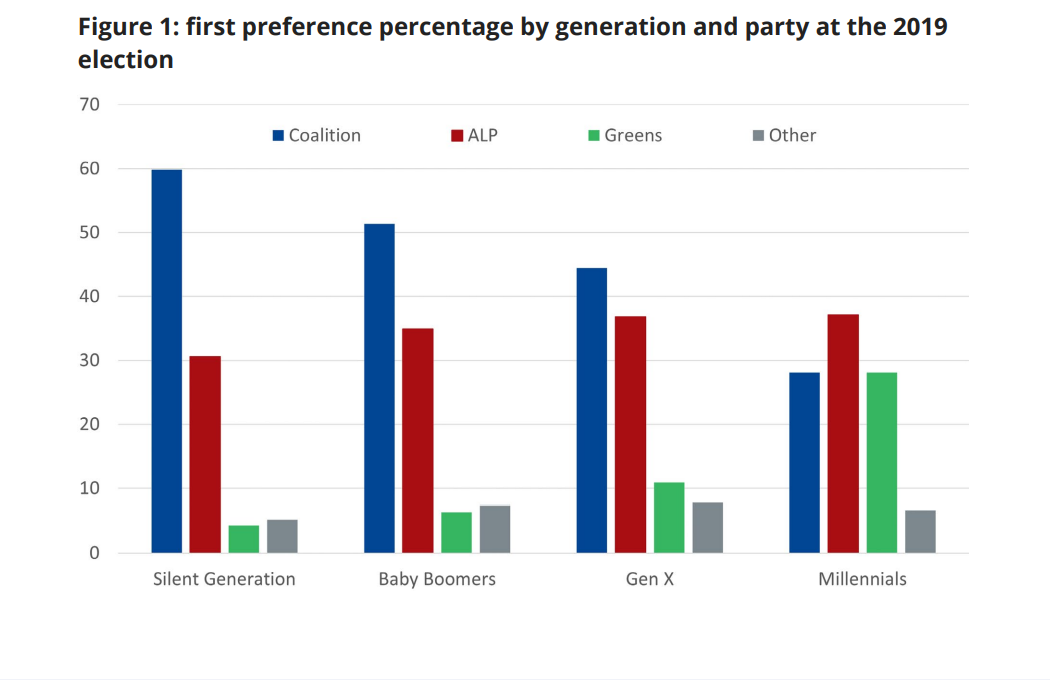
Given that Greens supporters tend to be younger than those of the major parties, and the younger age bracket are the ones who engage with political content via online channels, the Green’s high following is no great shock.
A figure from the Parliament of Australia shows that first preference percentages for the Greens rose steadily in each generation in the 2019 Federal Election.
One Nation
One Nation, which has seen an unprecedented surge in polling popularity, also has a smaller, more simplistic Instagram for their Victorian faction.
Many of the posts criticising political opponents are directed towards the Liberal party rather than to the left-of-centre or left wing parties.
This choice reflects a situation many would have thought unlikely prior to this election: that One Nation may gain enough popularity to feel confident in asserting itself as a separate, stronger, right-wing alternative to the Liberals.
Despite spending barely over $21,000 on campaign advertising the party’s Instagram page is popular.
Two of the page’s most viewed videos are about the flying of the Australian flag and about transgender people competing in sport.
This ‘culture war’ style content is likely what has gained the party its online success, as algorithms tend to favour divisive content.
We see here one of the key differences between old-school campaigning and its social media equivalent.
Traditional door knocking and advertising costs money, money which the smaller parties inevitably have less of. On social media however, funding – while still important – is not the only key to viewer outreach.
Rather, topics that are likely to spark identity and social debate among viewers garner more algorithmic attention than content directly discussing policy proposals.
Individuals gaining traction
Notably, the two most followed MPs in the state (on Instagram) don’t belong to either major party, or even to the two prominent minor parties (Greens and One Nation).
Georgie Purcell, a member of the Animal Justice Party, is the most followed Victorian MP on instagram.
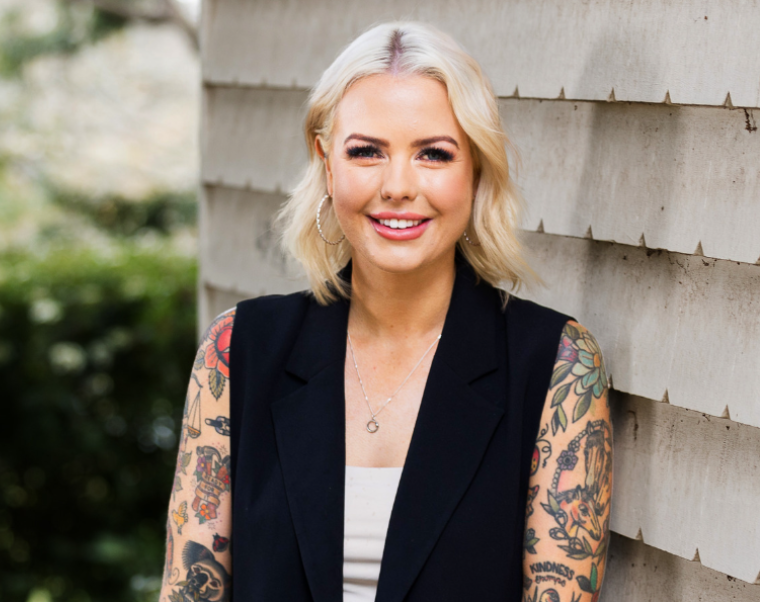
Purcell’s public persona emphasises her unconventional pre-political life and celebrates a new approach to politics. Her popularity indicates a new relationship between politicians, the parliamentary system and the public may be emerging.
Jordan van den Lamb, well known as ‘Purple Pingers’, is a social media activist and the Victorian Socialist party’s candidate for the seat of Melbourne.
With his withering videos criticising rental properties and his aptly named website shitrentals.org, the 31-year-old has accrued 363k followers across instagram and tiktok.
AI
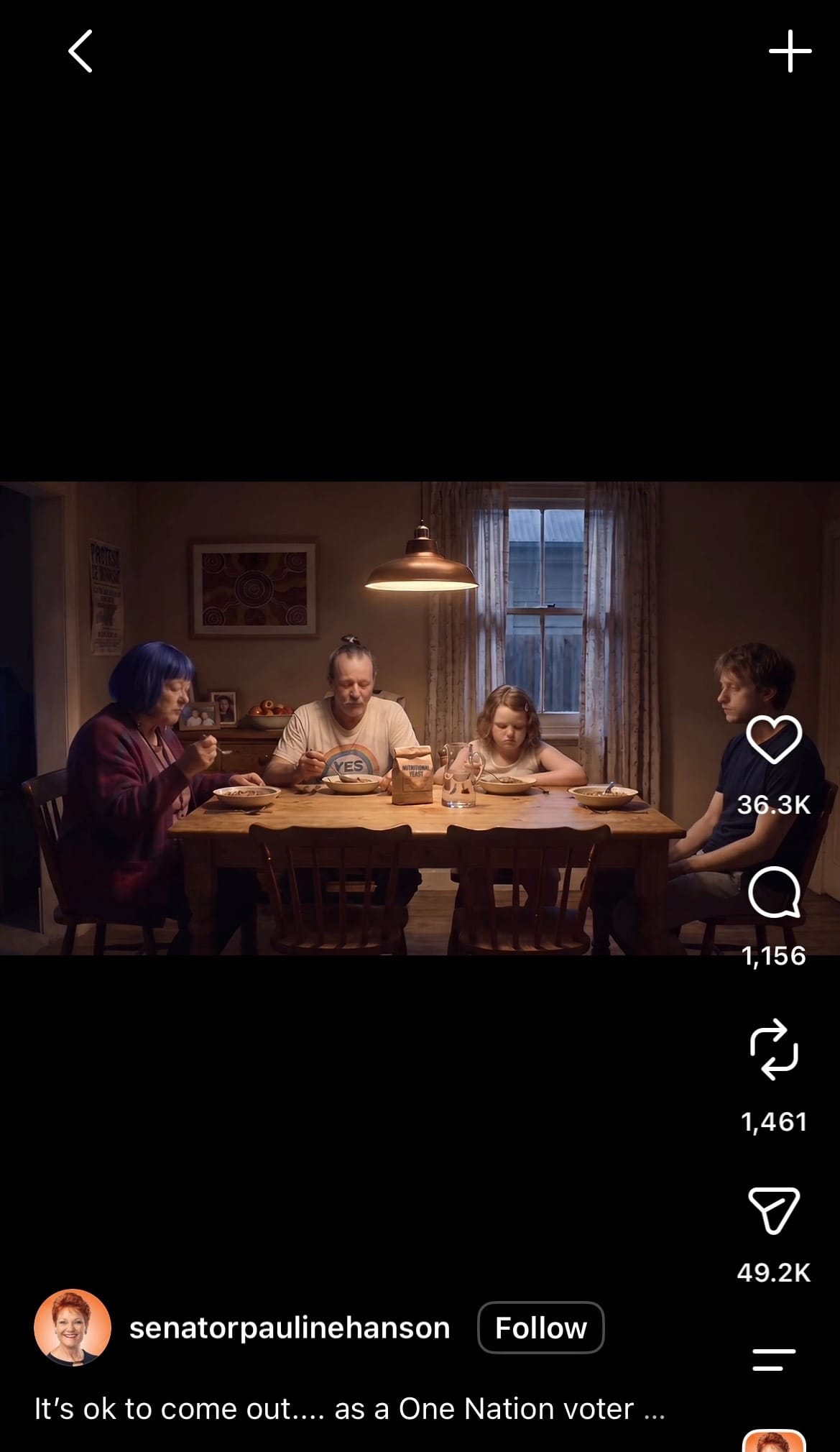
The 2026 state election has seen an unprecedented use of AI content from both major parties and One Nation. The Greens have publicly criticised the flippant use of AI advertising by the major parties.
There's the infamous One Nation ad in which a ‘woke’ family “comes out” as conservative after which follow numerous racist depictions of immigrants and people of colour.
Labor and Liberals eagerly joined in with a deep-fake of Jess Wilson and One Nation leader, Warren Pickering, as trick-or-treaters and a video of Ben Carroll asleep on a racehorse.
Most young people have doubtless become familiar with the AI ‘enslopification’ of online content by now, with absurdist AI videos spreading through feeds like wildfire.
Despite this, research indicates that AI generated political content was just beginning to emerge during the 2025 federal election, so the full impacts of AI use on political outcomes remains to be seen.


