


Australia and Japan: A new defence alliance or just a deal?

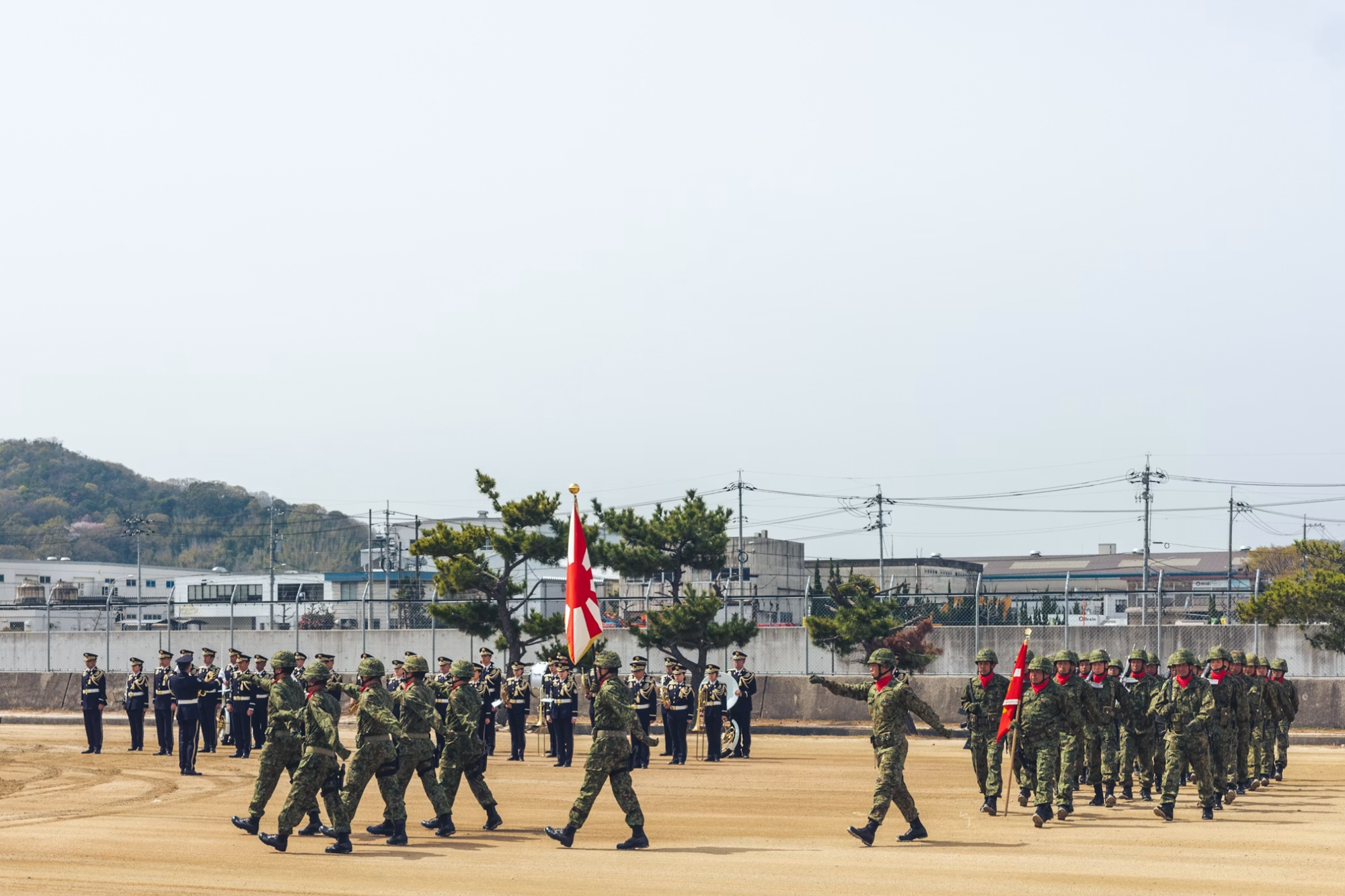
Australia's growing defence relationship with Japan is raising questions about whether the purchase of Japanese warships could lead to closer military cooperation beyond the existing strategic partnership.
Under the banner “Japan is Back,” Prime Minister Takaichi’s government has launched a series of assertive military moves across the Indo-Pacific.
Japan is advancing the development of an air-launched variant of its upgraded Type 12 surface-to-ship missile. Captive-carry flight tests with mock-ups began in late July 2026 at ATLA's Gifu Test Center and remain ongoing, scheduled for deployment in 2027.
In May 2026, Japanese forces fired Type-88 anti-ship missiles during joint military exercises in The Philippines, marking a significant development in Japan’s overseas military activities.
As Australia deepens its defence ties with Tokyo, questions are emerging about the benefits and risks of closer military cooperation with Japan, particularly how the relationship could affect Australia's strategic independence.
Purchase of Japanese warships
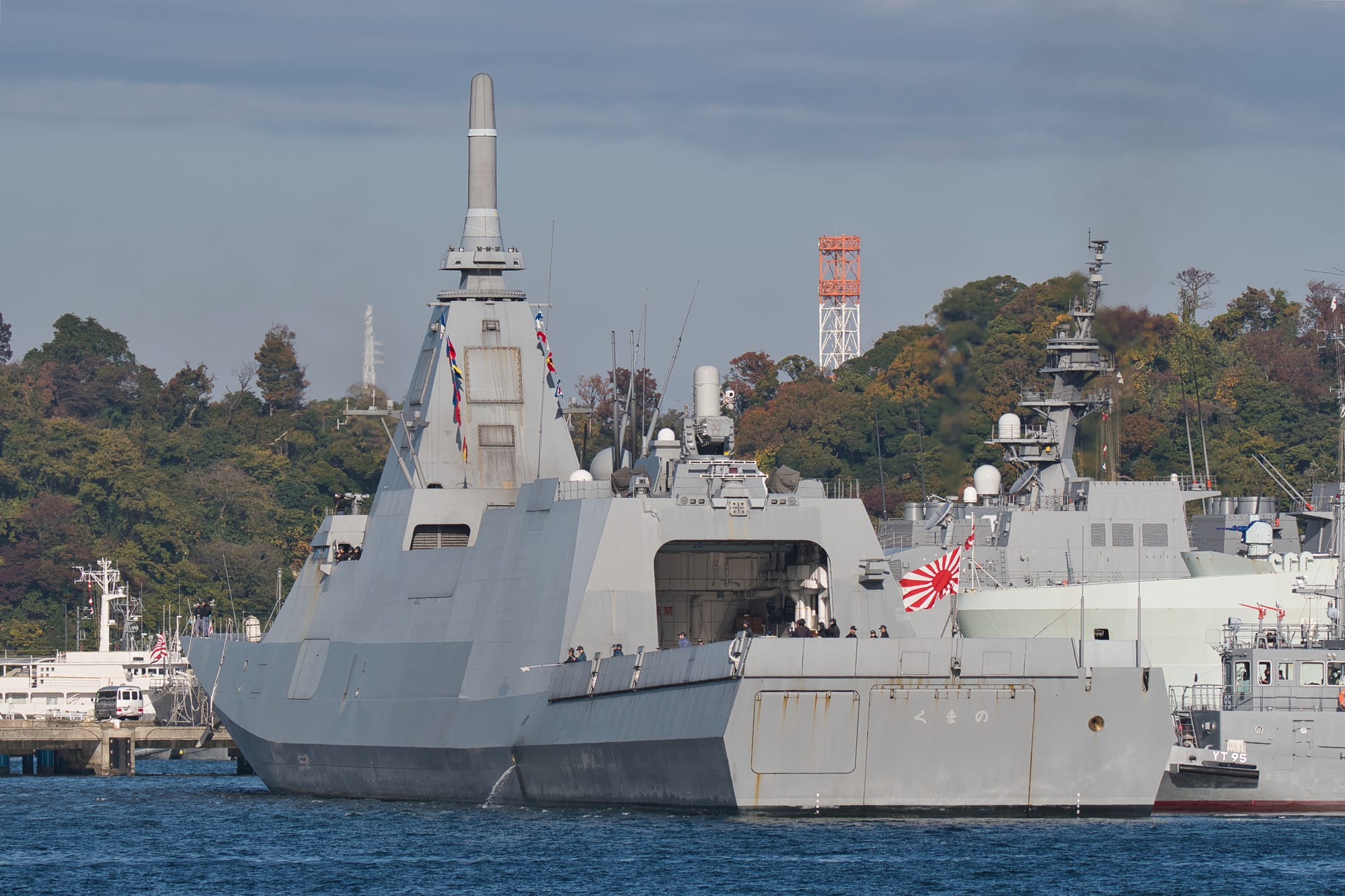
On 18 April 2026, Australian Defence Minister Richard Marles and Japanese Defence Minister Shinjiro Koizumi signed the Mogami Memorandum aboard the JS Kumano at Station Pier in Melbourne, following the finalisation of contracts for Australia's first three upgraded Mogami-class frigates.
According to the agreement, Japan will build the first three upgraded Mogami-class frigates for the Royal Australian Navy through Mitsubishi Heavy Industries. The remaining eight frigates are planned to be built at the Henderson Defence Precinct in Western Australia, subject to the necessary shipbuilding arrangements being established.
The frigate deal represents Japan's largest defence export to date and marks a significant milestone in the country's efforts to expand its international defence industry.
According to an analysis by Asialink at the University of Melbourne, an Asia-focused research and diplomacy institute based at the university, the deal covers 11 upgraded Mogami-class frigates which will replace the ageing Anzac-class fleet.
On 21 April 2026, Japan revised its Three Principles on Transfer of Defense Equipment and Technology, allowing exports of lethal weapons to approved partner countries while retaining strict government controls.
The decision did not require prior parliamentary approval. Within three days, Japan had taken another step away from its decades-long postwar arms export ban.
Mogami-class: The Export of an Offensive Warship
The upgraded Mogami-class frigates purchased by Australia are not ordinary patrol vessels.
According to the Royal Australian Navy, the upgraded Mogami-class frigates have a range of up to 10,000 nautical miles and a 32-cell vertical launch system. The vessels are designed for air defence, anti-submarine warfare and maritime and land strikes.

Retired law professor and historian of Australia's naval alliances at the Australian National University, Dr John Seymour, cautions that Australia's experience with AUKUS offers a sobering precedent for external defence procurement.
He noted that the nuclear submarine deal depends heavily on the United Kingdom, and said “how unreliable Britain has proved in the past… [and Britain] failed to meet the obligations. It reneged on agreements."
But for reasons Seymour said were obvious, more and more doubts have arisen recently about the capacity and willingness of the United States to assume responsibility for the Indo-Pacific.
Applying the same logic to Japan, Seymour argued the frigate deal should not be mistaken for anything more than a transaction.
"That is just a purchase arrangement. It wouldn't necessarily give birth to a continual alliance," he said.
Australia's upgraded Mogami-class frigates will feature a 32-cell vertical launch system, compared with the 16-cell system fitted or planned for Japan's original Mogami-class frigates. However, Japan is also developing upgraded Mogami-class frigates with comparable capabilities.
But what are the costs?
Research done by The Australian Naval Institute indicates that Australia's reliance on Japanese suppliers continues to deepen the relationship.
The agreement will strengthen industrial and technical cooperation between Australia and Japan, including shipbuilding, maintenance and supply chains. However, the extent to which Australia will depend on Japanese suppliers for future upgrades, ammunition and technical support remains unclear.
Prime Minister Sanae Takaichi has advocated expanding Japan's defence capabilities and revising its pacifist constitution, raising questions about the country's future military role and the implications for regional security.
The Cost of "Potential Allies"
In early May 2026, Japanese Prime Minister Takaichi visited Canberra just over two weeks after signing the frigate contract.
While Canberra describes the relationship as a special strategic partnership, Tokyo has gone further, with Prime Minister Takaichi describing Australia and Japan as partners at a level that could be considered “quasi-allies”.
An analysis by the Australian Strategic Policy Institute argues that the Mogami acquisition could strengthen defence industry cooperation between Australia and Japan, while creating opportunities for broader economic and supply-chain collaboration.
Dr Seymour cautioned that Australia's experience with AUKUS offers a sobering precedent for judging what a "quasi-alliance" with Japan might actually mean. He noted that the nuclear submarine deal depends heavily on the United Kingdom, which will design, test and supervise the construction of Australia's submarines.
"If Britain has spare cash for defense, why doesn't it spend it on NATO?" he said.
Seymour argues that Australia's longstanding historical and cultural ties with Britain and the United States make its relationship with Japan fundamentally different, despite growing defence cooperation between Canberra and Tokyo.
"We're never, as far as I can see, likely to have such a friendly and close relationship with Japan."
"The memories of the cruelties of the Japanese in World War II are still fresh. And so there's not the emotional foundation for suddenly blossoming into some sort of alliance," he said.
Australia’s strategic independence on the line?
Dr Seymour also said AUKUS was not immune to doubts.
"A lot of people have said that simply, AUKUS will never happen. It's too heroic and it's so complex and it's so expensive, it will simply never happen," he said.
Dr Seymour also questions whether Australia can build and sustain a credible navy of its own.
"Australia has never really fully developed its industrial capacity to produce warships.”
"There are obvious benefits for a middle power to be allied with a stronger power. But there is a comfort in an alliance. You worry about abandonment… there are risks. And of course, the major risk is surrender of sovereignty."
For Seymour, the crux of the debate centres on Australia deciding to ever go it alone it risks abandonment but that dependence risks losing control of its own defence. He also questioned what was in the best interest for Australia.
"It was in the best interest of Australia to fight Japan in 1945. Is it in the best interest now to expose ourselves via some sort of blunder by Trump to fight against China?" Dr Seymour said.


