


What could Lupita Nyong’o and you have in common?

“When we reach puberty, we’re taught that periods mean pain, and that pain is simply part of being a woman," Academy award-winning actress Lupita Nyong’o wrote in an Instagram post, adding, “we must reject the normalisation of female pain.”
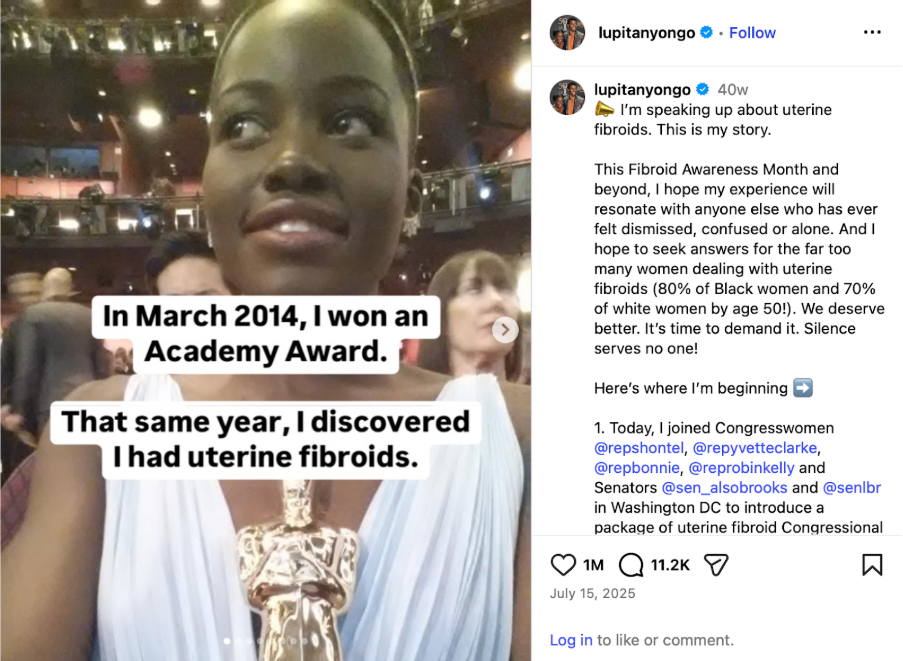
After discovering she had thirty uterine fibroids that had to be surgically removed in 2014, Nyong’o has been raising awareness about women’s reproductive health and fibroids. She used social media platforms, like Instagram, to help educate and raise funds for women’s reproductive health research.
Obstetrician/gynaecologist Associate Professor Jacqueline Boyle said fibroids are non-cancerous growths that develop on the wall of the uterus.
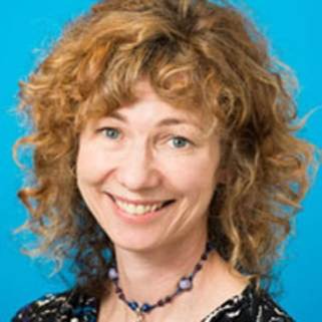
“It is not clear what makes women at risk of fibroids although there is probably some genetic association,” Dr Boyle said.
The Women Deserve Better report by Monash University found that women are being left uninformed and unsupported by the health system due to a lack of prioritisation of the issue of fibroids and cysts, reflected in the lack of funding provided and information accessible.
According to Brigham and Women’s Hospital, up to 70 per cent of women experience fibroids and cysts.
Among this 70 per cent is twenty-year-old Maria Haywood, who knew something wasn’t right with her health when she realised her “hormones [were] all over the place". She has since been diagnosed with PCOS (polycystic ovary syndrome).
PCOS is defined by the World Health Organisation as "a common hormonal disorder in which higher than normal androgen levels" lead to side effects such as irregular menstrual periods.
Uterine fibroids are non-cancerous tumors of muscle tissue that can grow in and on the uterus.
Haywood recounted how after fainting regularly, she experienced ‘a serious incident’ at a job that required an ambulance and incident report as ‘physical proof that it happened’.
She said she had to be in a ‘dangerous situation’ to be taken seriously by medical staff.
Haywood said, "Sometimes they just don’t take us seriously, especially if we look healthy on the outside".
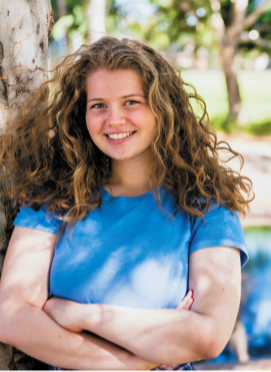
Haywood said understanding the difference between normal period pain and abnormal pain is essential to the process of seeking help.
She added, "my joints flare up all the time" and "was living in constant pain, 24/7, but everyone just told me it was normal."
She recounted how doctors dismissed her symptoms as ‘growing pains.’
"It should be mandatory to talk about… PCOS. If we could be taught at a young age what it is, we can look out for the signs for ourselves," Haywood said.
Regarding awareness about women’s reproductive health, Jacqueline Boyle said that while fibroids ‘are almost always non-cancerous’. In other words, ‘less than one in 1,000 a cancerous fibroid will occur, and this is known as a leiomyosarcoma.’
Dr Boyle said for people experiencing fibroids, symptoms depend on their size and location.
"Some [fibroids] won't cause any symptoms and others can cause symptoms such as heavy periods, a feeling of fullness in the lower stomach area, pain, frequent urination, complications during pregnancy" such as an increased chance of needing a caesarean birth.
Dr Boyle said to resolve issues with fibroids, a consultation with a gynaecologist was necessary for an assessment of the uterus and advice on management.
Dr Boyle said managing symptoms may mean having the fibroid removed with surgery or radiofrequency ablation to shrink the fibroid and sometimes blocking hormones with medication can help.
"Women often don’t know what is normal and what is not when it comes to pain and periods" and "are not sure when to seek help."
Dr Boyle recommends the following resources for those curious or concerned about reproductive health:
https://www.jeanhailes.org.au/
https://www.healthdirect.gov.au/menstruation
https://www.healthdirect.gov.au/heavy-periods
Monash students can access health services and information through these resources:
https://www.monash.edu/students/support/health


