


What’s behind the support for One Nation?

Just two months from Victoria’s state election, Pauline Hanson is attracting attention from all sides of the political spectrum.
In August, hundreds of students throughout Melbourne and other Australian cities protested One Nation and its leader with student-led walkouts.
The protests came as the party continued to break ground across the country, including winning the traditionally Labor-held seat of Secret Harbour in Western Australia.
Furthermore, a Roy Morgan poll conducted in early August put One Nation at 23.5 per cent of the Victorian primary vote, just 2.5 percentage points behind Labor and the Coalition.
These events raise a broader question: what’s driving One Nation’s rise?
Monash University political scientist Associate Professor Zareh Ghazerian said growing distrust in the major parties has given One Nation a significant boost in popular support.
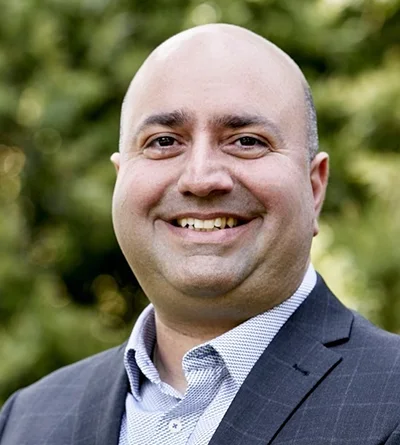
“Ultimately, the right of centre side of the Liberal Party has been organisationally very fragile, which has given rise to One Nation,” Ghazerian said.
According to Ghazerian, this lack of stability has bolstered One Nation’s credibility as a political force.
“The fact that One Nation and Pauline Hanson has had such a lengthy public profile in the history of Australian politics gives the party a sense of stability that the Liberal Party has been lacking in recent times."
This lack of stability may be translating to the polls.
Following One Nation’s recent win in WA, a Newspoll had the Coalition trailing One Nation and the Labor Party in the primary vote, at 19 per cent.
Ghazerian said immigration is also a key issue for One Nation supporters.
“I think there is a sense that populist party leaders tend to tie immigration to economic outcomes,” he said.
“In Australia, I think that really centres around housing affordability.”
Monash University political scientist Dr Benjamin Moffitt has written extensively about Pauline Hanson and One Nation’s focus on targeting outgroups like asylum seekers and immigrants.
According to Moffitt, while economic issues such as housing affordability were important, they don’t fully explain the party’s recent surge in popularity.

“Those conditions have been there, actually, for a long time,” Moffitt said.
“But without that collapse of the main centre-right party, we wouldn't be having this conversation.”
Moffitt agrees with Ghazerian that concerns about immigration are increasingly being tied to economic pressures.
“It’s the same kind of immigrant figure, but re-framed in an economic way, which I think gives people more cover to target migrants.
“It’s actually economic anxiety.”
According to Moffitt, One Nation’s ability to turn these concerns into political support has been helped by its use of social media.
“They’ve been very good at using and mobilising social media."
This is visible in the party’s online support base.
In comments across One Nation’s Facebook and Instagram, users frequently express mistrust of the major parties.
In a 30 August post on the Pauline Hanson's Please Explain Facebook page following the Secret Harbour win, both major parties were targeted.
In the post, One Nation framed the result as evidence the party could challenge Labor in seats where the Liberal Party had failed.
The post claimed One Nation was “not splitting the conservative vote” and was “taking on the political establishment”.
The post attracted more than 18,000 reactions and 1,300 comments, with supporters celebrating the win and claiming that One Nation was now Labor’s biggest threat.
Some commenters described the victory as the first of many “reckonings” that were yet to come, with one saying that “ON is the only conservative vote”.
However, Moffitt said their success should not be attributed solely to social media.
He said traditional media has played a key role in keeping One Nation in the public eye.
“One Nation is fantastic at attracting attention. Barnaby Joyce, the other week, yelling at a dog became a major story,” he said.
“So this is a media story as much as a political one.”
With the Victorian state election now less than four months away, MOJO News asked both academics how they thought One Nation would fare.
Ghazerian pointed out that One Nation has historically struggled in the state, but that the party’s current polling may shift the balance.
“I think it’s the great unknown,” he said.
“However, if we look at history, and we look at current opinion polls, there’s a huge mismatch.”
Moffitt was less reserved in his judgement.
“I think [they'll do] really well, which is a shock,” he said. “You’ve got a Coalition party that is even worse than the federal party in terms of infighting and having a kind of identity crisis."
“I think you’ve got a preview of what’s to come federally.”
November will provide the clearest test of the party’s support.


