

From Delhi to Melbourne, Indian youth takes dissent beyond borders


Thousands of kilometres from Delhi’s Jantar Mantar, young members of Melbourne’s Indian community gathered outside the State Library of Victoria on 25 July.
They raised their voices in solidarity with students protesting in India demanding accountability over the NEET-UG paper leak and the resulting deaths of 21 students by suicide.
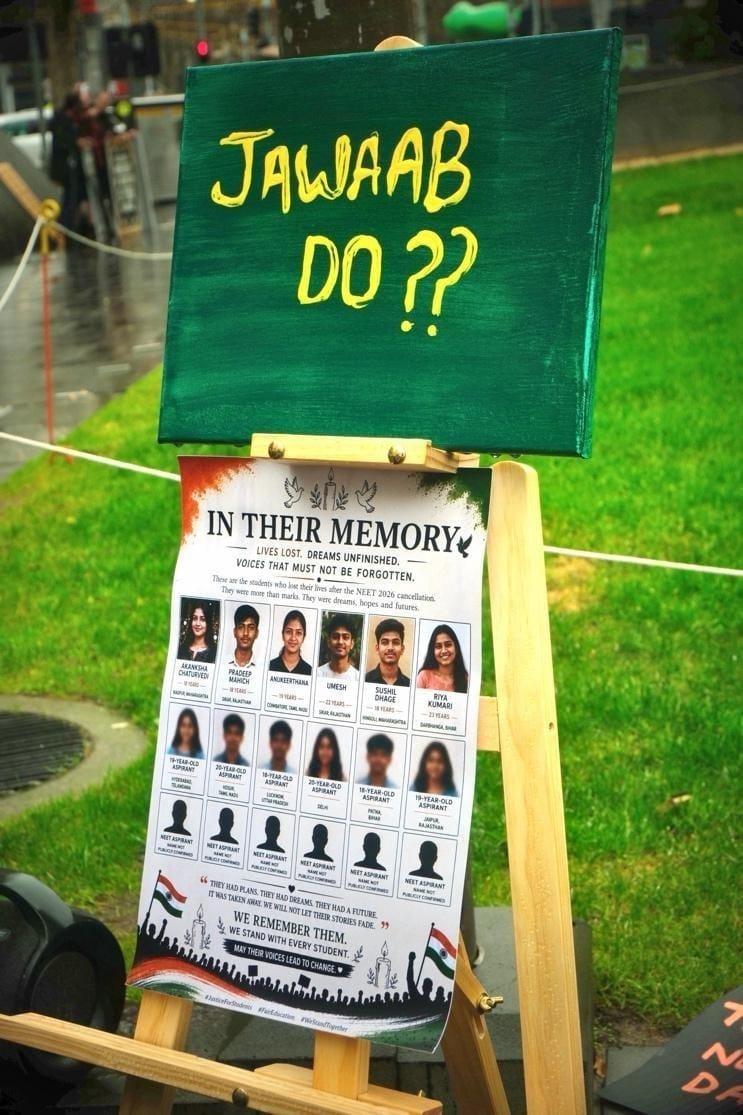
Protest signage at the Melbourne protest, PHOTO: Arathi Sasikumar
The Melbourne rally came after weeks of demonstrations at Jantar Mantar led by the Cockroach Janta Party (CJP), which demanded the resignation of then Education Minister Dharmendra Pradhan, over the NEET-UG paper leak and compensation for the families of students who died by suicide.
Several weeks into the Delhi protest, Pradhan announced his resignation marking a major political victory for the protestors.
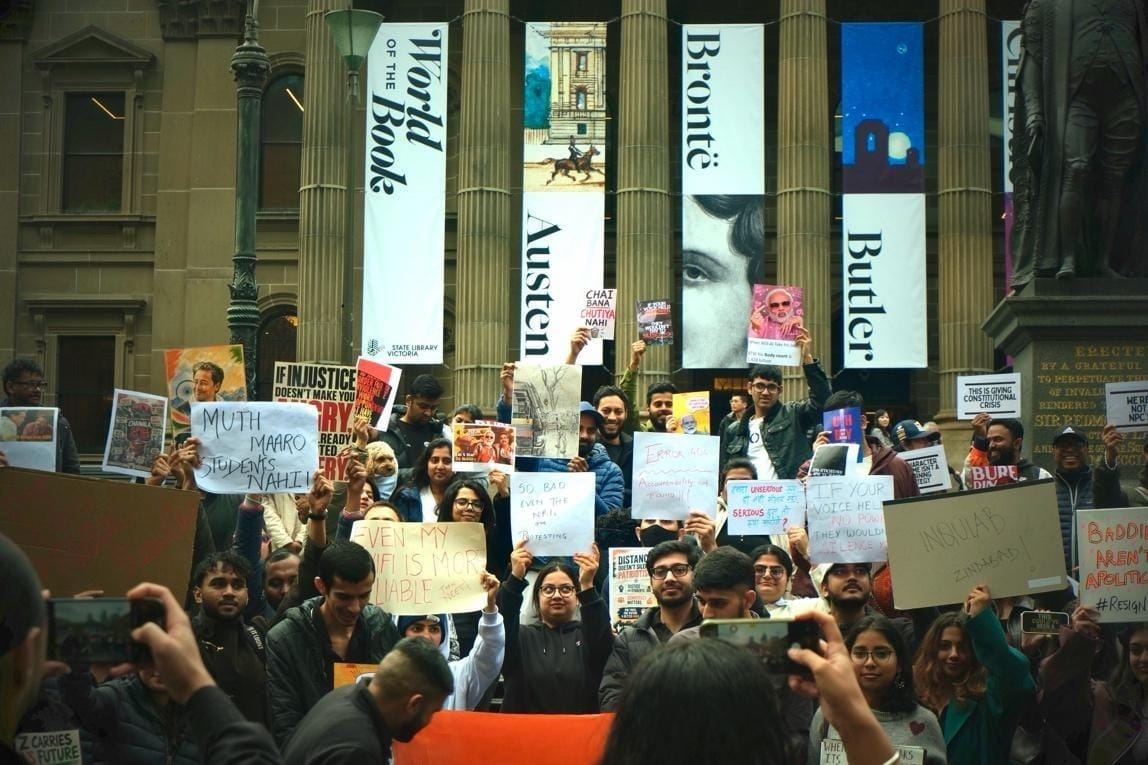
Students in Melbourne protesting in front of the State library in solidarity with the students in Delhi, PHOTO: Arathi Sasikumar
For many the protest had begun on their phones, with videos from protests in Delhi circulating across social media for weeks.
For Melbourne protest attendee and student journalist, Kamya Garimella, following the protest online made it difficult to remain a bystander.
“Every day, I would go on my phone, and the first thing I would see was protest videos and students being very brutally treated by the police,” she said.
“Here, where I have the right to protest, it felt wrong not to at least try.”
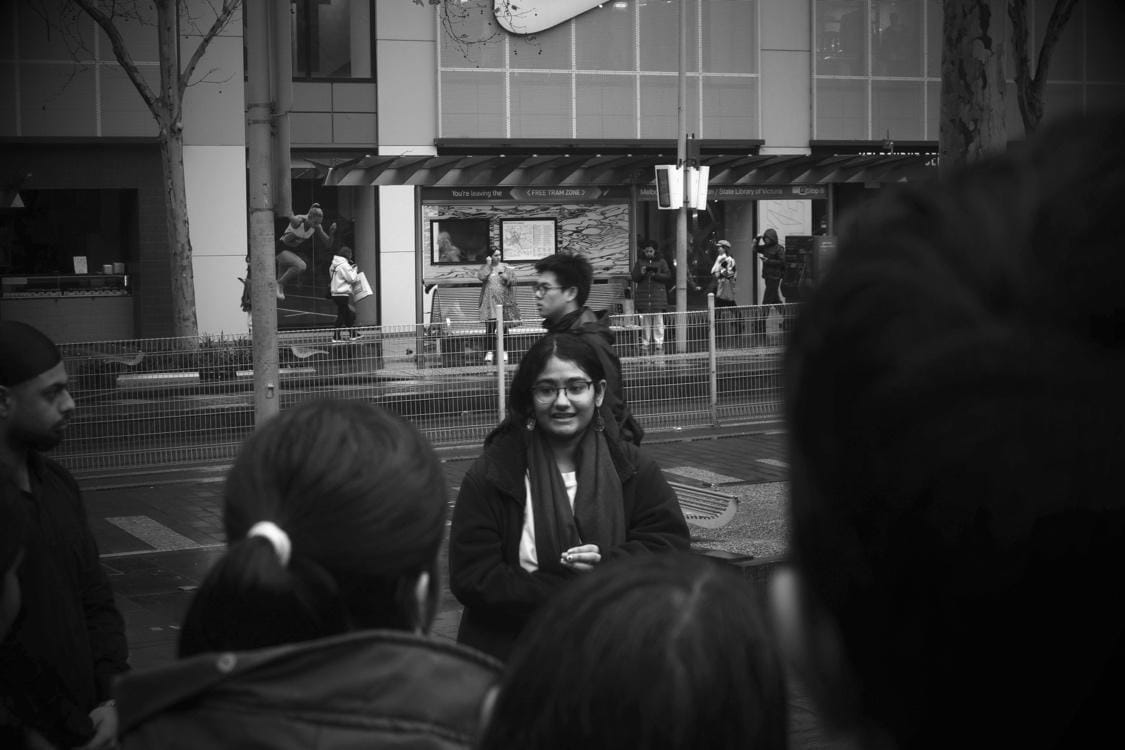
Kamya Garimella speaking at the Melbourne student led protest, PHOTO: Arathi Sasikumar
Garimella said the Delhi protest was changing how young people saw their own ability to speak out.
“Jantar Mantar was a demonstration that no matter how bad things get, with enough dedication to your cause, you can still make a change,” she said.
“I think the student community realised that they have strength, they have a voice, and they are allowed to and should use it for their cause.”
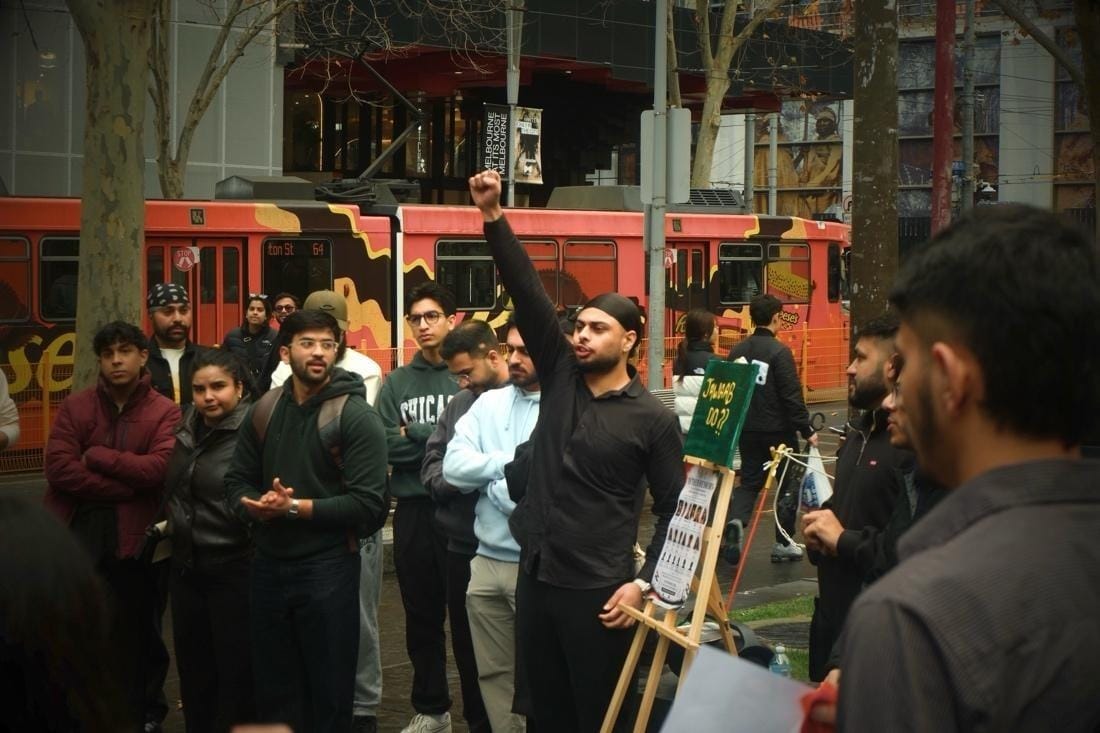
Protesters gathered in front of State Library of Victoria, PHOTO: Arathi Sasikumar
The connection between the Delhi protests and Melbourne rally was largely built online.
Melbourne content creator, Rishika Tiwari, posted a video informing people about the protest and encouraging students in Melbourne to attend in solidarity.
The post attracted backlash online, including comments telling her to “go back to India” and warnings that the protest could attract racism.
Despite the hate, Tiwari said seeing people turn up on the day made the post worthwhile.
“I felt really good that I stood up for what was right rather than not using my influence and my page to spread awareness,” she said.
Tiwari said the support from overseas could also give protesters in India confidence to continue demanding accountability.
“Knowing that the whole nation and the world is standing with them, will give them a lot of courage to stand and ask for accountability,” she said.

Protestor holding a poster at the Melbourne student rally, PHOTO: Arathi Sasikumar
The movement also travelled in the opposite direction, from screens back into the streets.
Anaya Sharma (not her real name), a 24 year old protester, travelled to Delhi from Odisha to join the demonstrations after following the movement online.
For Sharma, the biggest change was moving from watching the protests to taking part in them.
“I learned that it's better to act than just sit and think about it,” she said.
But she warned against treating the resignation as the end of the movement.
“This protest should not be seen as an end in itself,” she said.
“It can be seen as a means to a higher goal, which is the complete restructuring of the Indian education system.”
Student protest is not new in India.
Sharma said the protest did not create a culture of dissent among students, but reignited one that was already there.
“It brought together such a large group of people and also gave them that kind of confidence that if people can come together, changes can happen,” she said.
The movement also reflects wider frustrations among young Indians over education, employment and the administrative failures on their futures.
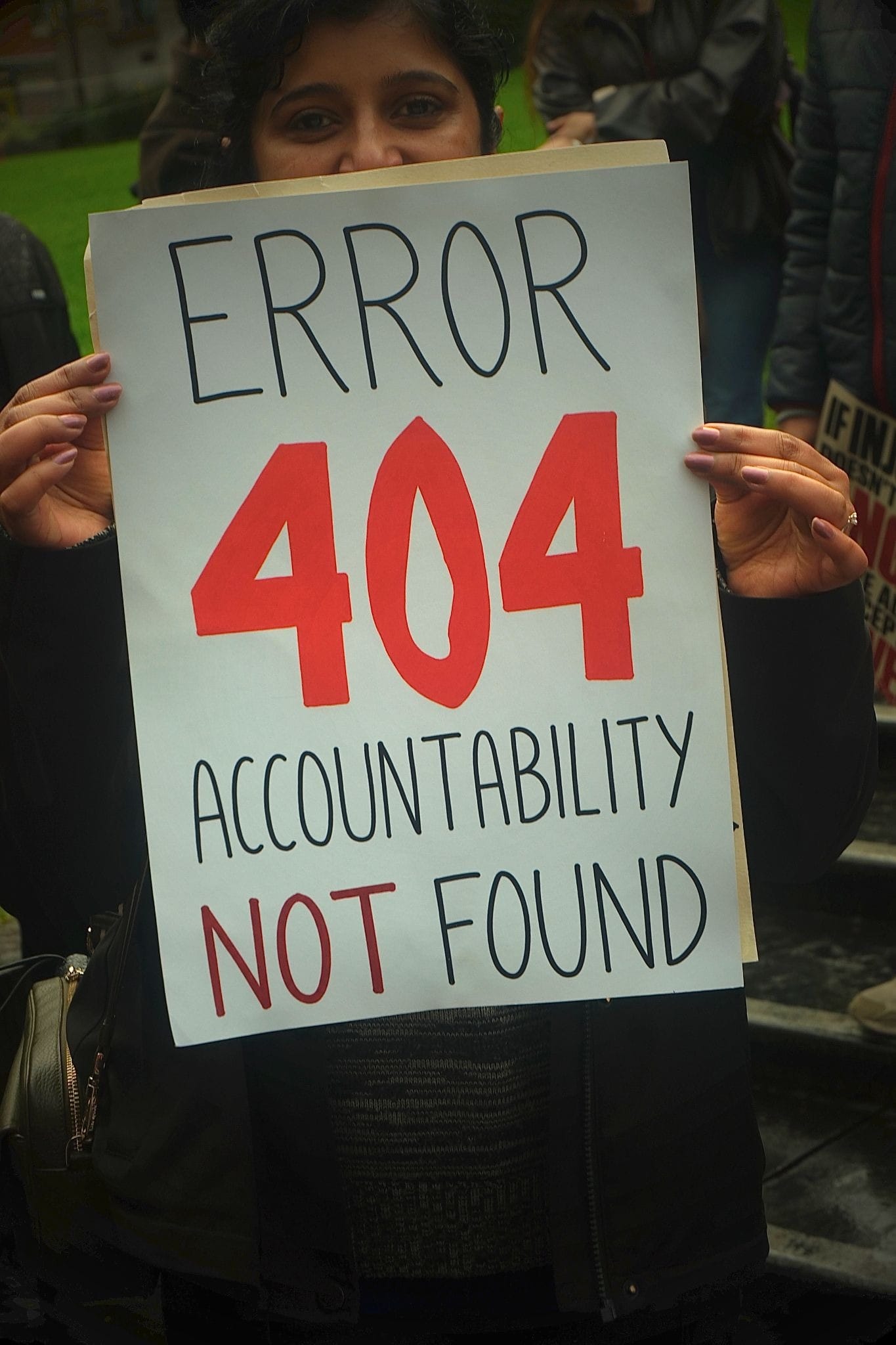
Protestor holding a poster at the Melbourne student rally, PHOTO : Arathi Sasikumar
In Jharkhand, students and government job aspirants have been protesting over alleged irregularities in recruitment exams, including the Jharkhand Public Service Commission's (JPSC) 14th Civil Services Examination.
The protest has called for exam cancellations, reforms to the recruitment system and an independent investigation.
On 10 August, thousands marched towards the Jharkhand Assembly where they were met with tear gas, batons and water cannons by the Jharkhand police.
In both movements, young people have used digital platforms not simply to consume information, but to organise, mobilise and build solidarity.
For Garimella, living overseas did not make the issue any less personal.
“If I have the right and I have the ability to say something about that, it would feel like a betrayal not to,” she said.
The Melbourne protest may have been thousands of kilometres from Jantar Mantar, but the distance did little to contain the movement.
For a generation that has watched protests unfold through their phones before entering the streets themselves, dissent is no longer limited to where it begins.
The question now is whether that momentum can survive beyond individual resignations and exam cancellations, and if the youth who found their collective voice will continue to use it.


