


Modern brands are lacking: why today’s youth are rejecting the modern-day fashion industry

For a growing number of young shoppers, vintage clothing offers something fast fashion increasingly struggles to provide: individuality.
According to a 2025 UK survey commissioned by clothing charity Traid, more than 80 per cent of 18–34-year-olds expressed an affinity for wearing secondhand clothing.
Ever since I was 15, I avoided fast fashion shops. My mum would try to take me to Chadstone to buy tank tops from Supré , jeans from Cotton On, coats from Zara, but I refused. I have always strived to be fashion forward, cultivating my signature look since I was three. What started as a fairy dress over jeans transitioned into a sundress paired with a tiara.
But as I went from a child to a teenager, I was no longer fascinated by anything new, and I found this confusing until I realised I wasn't alone.
For me, this shift can be traced back to COVID. My hobbies consisted of watching movies, going down the rabbit hole of social media, and online shopping. Pinterest became my virtual vision board, and I became very well acquainted with Australia Post.
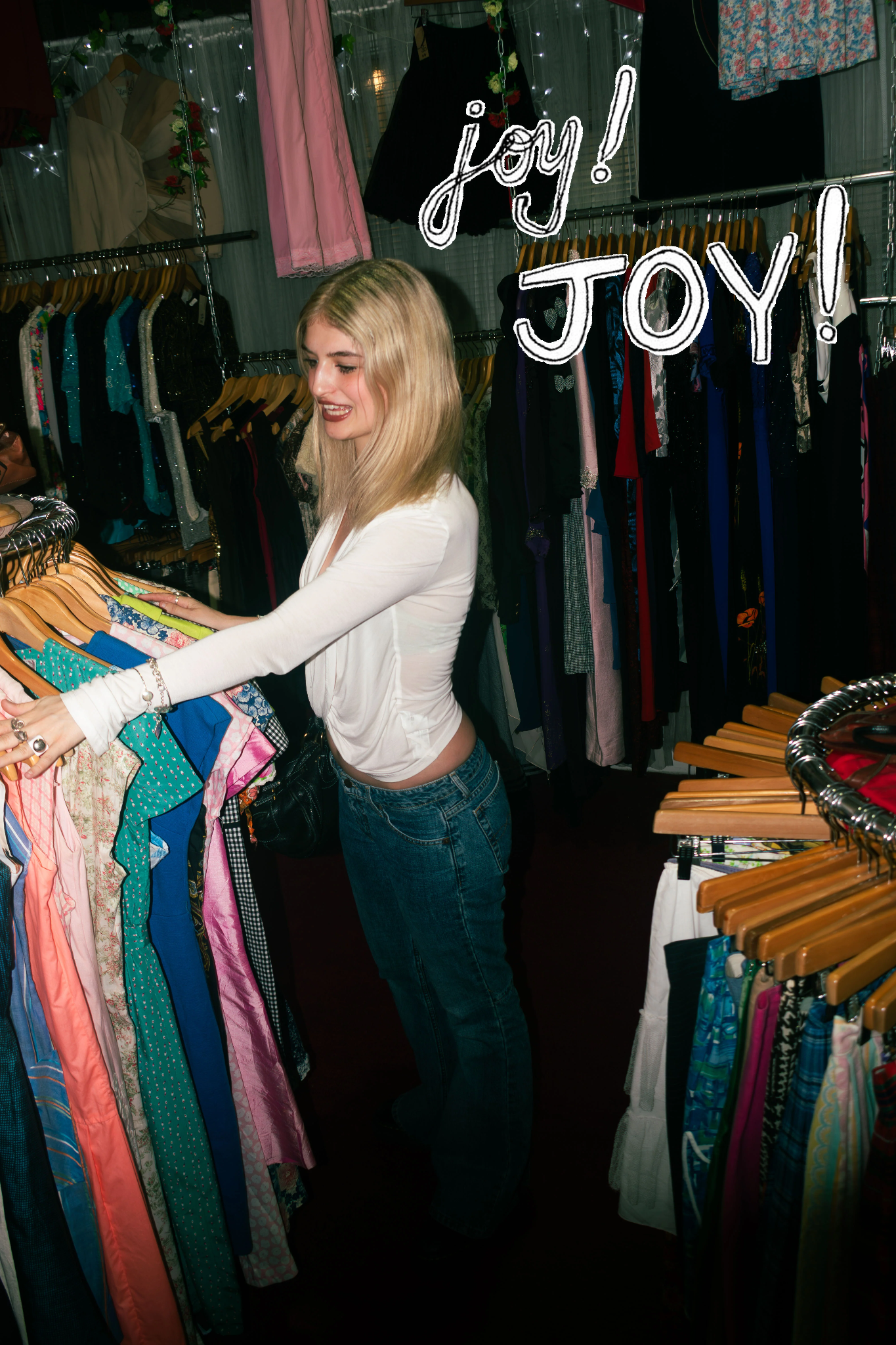
Diving into worlds of the past made me realise that fashion used to be fun! What were now skinny jeans with a daggy jumper used to be bootcut jeans with a bedazzled zip-up.
I began trying on different looks: the teen protagonist in a romcom, the mean girl in a coming-of-age movie, the nerd in a Disney Channel Original. I was dressing for no one but myself. I wasn’t subconsciously influenced by my peers, and I wasn’t concerned about what anyone thought of me. From then on, I had no interest in conformity, and whether or not it was considered cool, I only wanted to buy vintage clothes.
The owner of Retrostar Vintage, Ryan Woodson, said that's why pre-loved clothes appeal to young people.
“People get to an age where they kind of want something that is their own thing and don’t want to wear the things that everyone else has,” Woodson said.
For those who also use fashion to express individuality, a disinterest in fast fashion is common. From a stylistic perspective, many new clothes look the same.
According to environmental organisation EARTHDAY.ORG, the global fashion industry produces approximately 100 billion garments annually. Yet for some shoppers, the sheer volume of clothing available has not translated into greater variety.
Science student, Sophie Powell, thinks new brands lack variety.
“Everyone’s making the same thing and printing a different logo on it,” she said.
Fast fashion brands have also faced accusations of copying designs, raising questions about originality in the industry. In 2023, multiple designers filed a lawsuit against online fashion retail giant, Shein, accusing the company of using Artificial Intelligence (AI) to find popular styles of clothing and reproduce them at a cheaper price.
Student, Tilly Asher, said this was one of the reasons she avoids buying new clothes.
“I feel like everything is the same, and I think that’s why I avoid regular retail shops… they’re not good quality, and they’re expensive,” Asher said.
Shopping vintage and secondhand is a good way to find unique pieces. Vintage pieces are harder to find and are often one-of-a-kind; turning someone else’s trash into your treasure is a fabulous way to develop your own signature style!
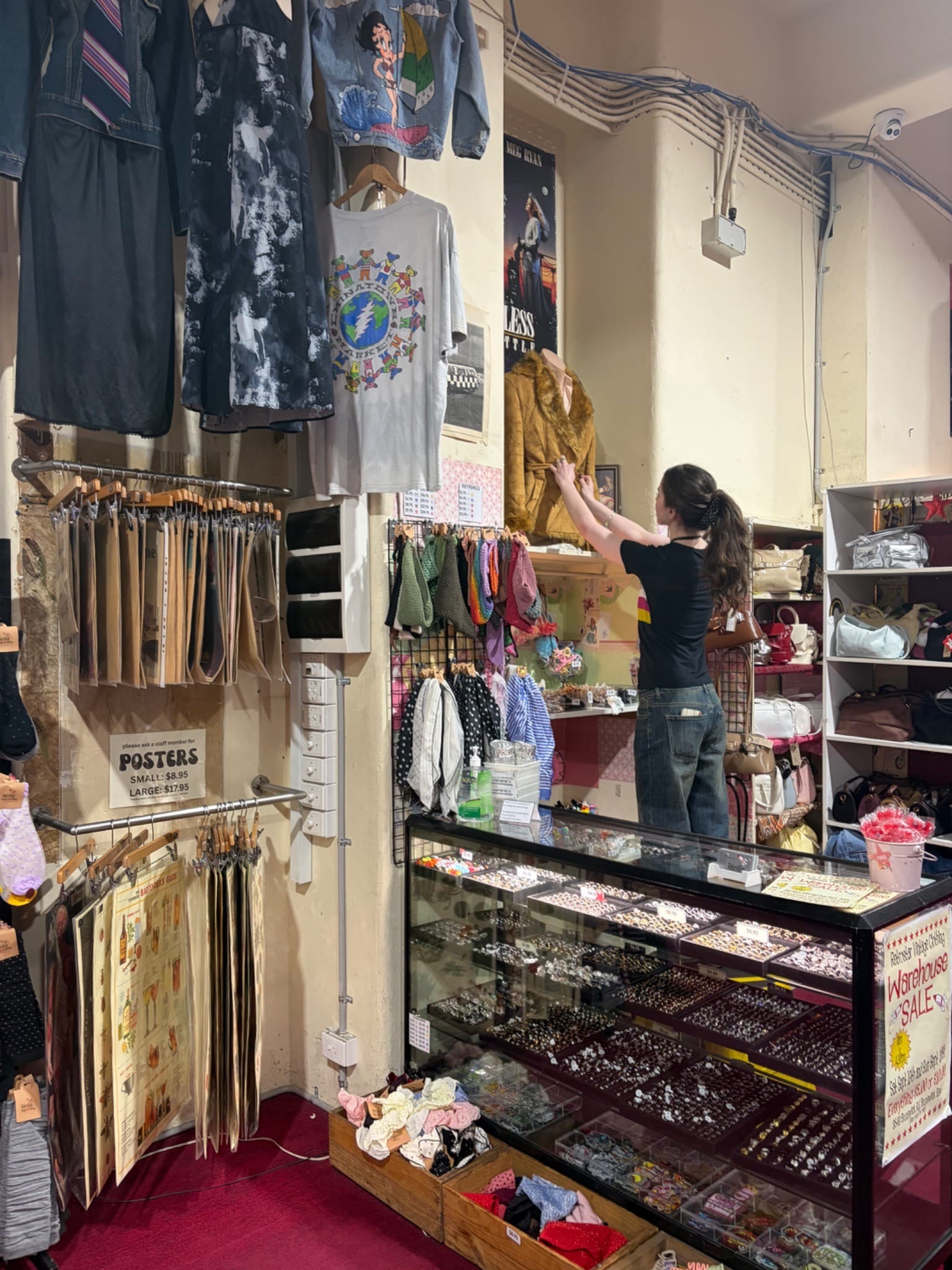
Vintage shops have something for everyone. Whether you are hunting for sleek and chic 90s staples, a bright and flamboyant 80s jacket, 70s western cowboy boots, or 2000s low-rise jeans, vintage stores are a clothing time capsule, holding secrets of the past about what made each era special.
Stockist and supervisor at Retrostar Vintage and retail assistant at Stupid Vintage, Gemma Greene, said vintage stores offer a broad range of styles.
“You’re not adhering to whatever's on trend at fast fashion stores, like Cotton On, Supre and all of that… you’re just finding something for yourself,” Greene said.

Greg Petro, CEO of consumer research company First Insight, has described Gen Z as the ‘sustainability generation', pointing to the importance younger consumers place on environmental concerns.
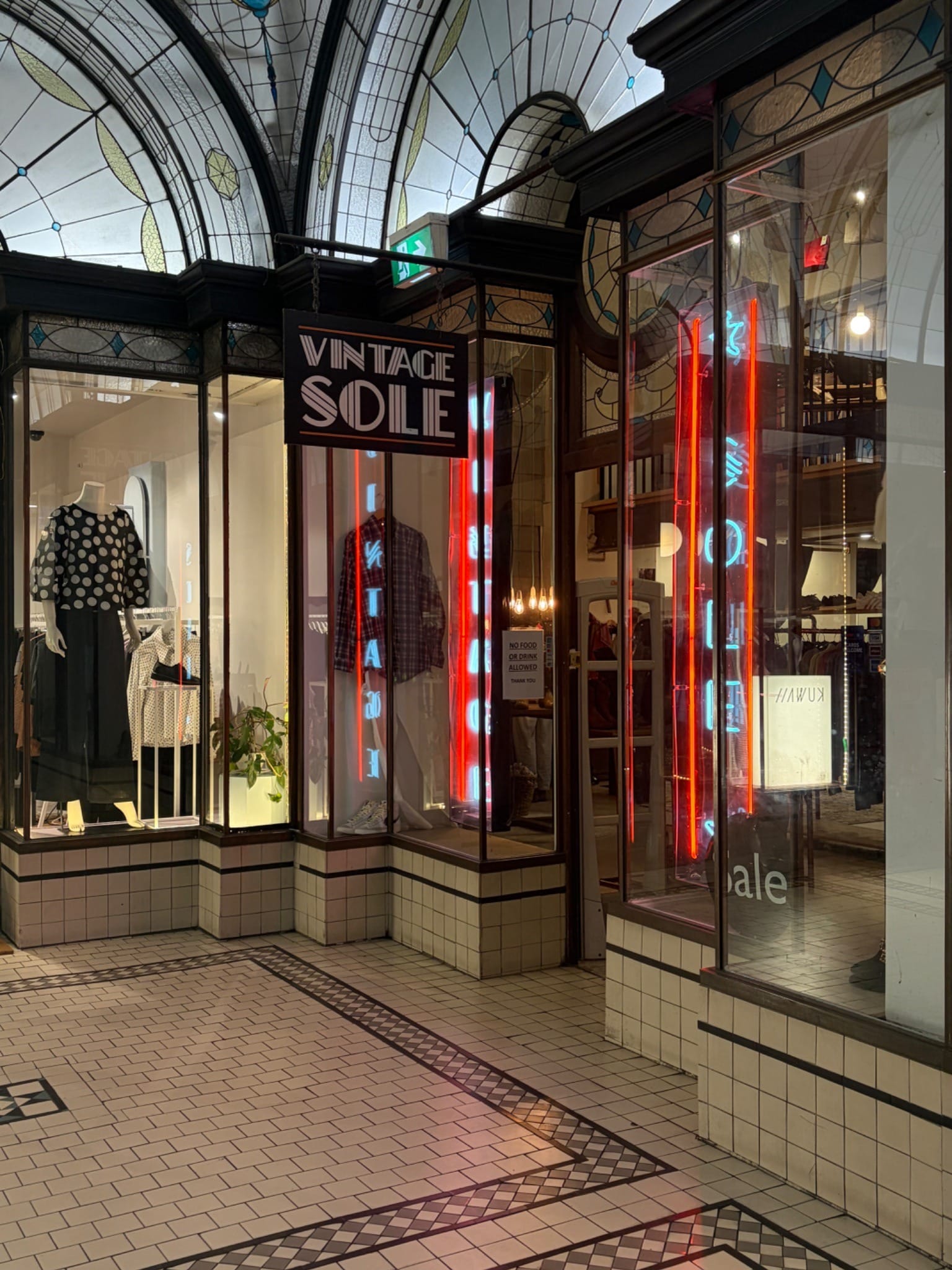
Retail assistant at Vintage Sole, Lollie Talbot, correlates the growth of secondhand shopping to a rejection of fast fashion.
“I think people understand we need more sustainable fashion,” Talbot said.
According to a 2024 article published by RMIT University, 58 per cent of Australian Gen Z consumers seek to purchase sustainably sourced products, although their shopping habits do not always reflect their environmental concerns.
Polyester is widely used in clothing production, but its reliance on fossil-fuel-based materials and the release of microplastic fibres during washing raise environmental concerns.
Earth.org cites estimates suggesting the fashion industry contributes around 10 per cent of global carbon emissions, although estimates vary depending on which activities are included.
Biomedicine student, Alexis Xerri, said quality no longer reflects the price tags.
“It’s quite depressing to walk into a shop and to see the same thing being sold that you could find in a thrift shop,” Xerri said.
Despite growing concerns about fast fashion's environmental impact and labour practices, its affordability, convenience and rapid response to changing trends continue to attract consumers. However, the growing popularity of vintage fashion has created another problem: increased competition for desirable secondhand pieces, pushing up prices and making some items harder to find.
According to Woodson, vintage pieces cost more to source, so they cost more to buy.
“Finding 80s Levi's jackets now is so much harder for us than it used to be. Scarcity puts the pricing up,” he said.
Xerri said that while this is a by-product of vintage’s popularity, it does make secondhand shopping harder for those who can’t afford expensive clothes.
“I think it’s quite sad because it’s making secondhand clothes inaccessible… when a big part of thrifting clothing is that it’s accessible for anyone,” she said.
For Gen Z shoppers seeking something different, vintage clothing offers an alternative to the uniformity of mainstream fashion. But as demand grows and desirable pieces become harder to find, the individuality that makes vintage shopping appealing may also come at an increasingly higher price.


